Check the machine
Verify engine speed, water supply, pump output, nozzle condition, equal tip sizing, free bar rotation, correct swivel operation, and that the cleaner matches actual machine flow.
Concrete stripes usually point to uneven overlap, inconsistent pace, incorrect surface-cleaner sizing, worn or blocked tips, inadequate flow, uneven bar rotation, or soil that needed better pretreatment.
Stop and diagnose instead of repeatedly cutting the same area. Confirm equipment function and pattern on a test zone, then use steady overlapping passes and inspect after rinsing.
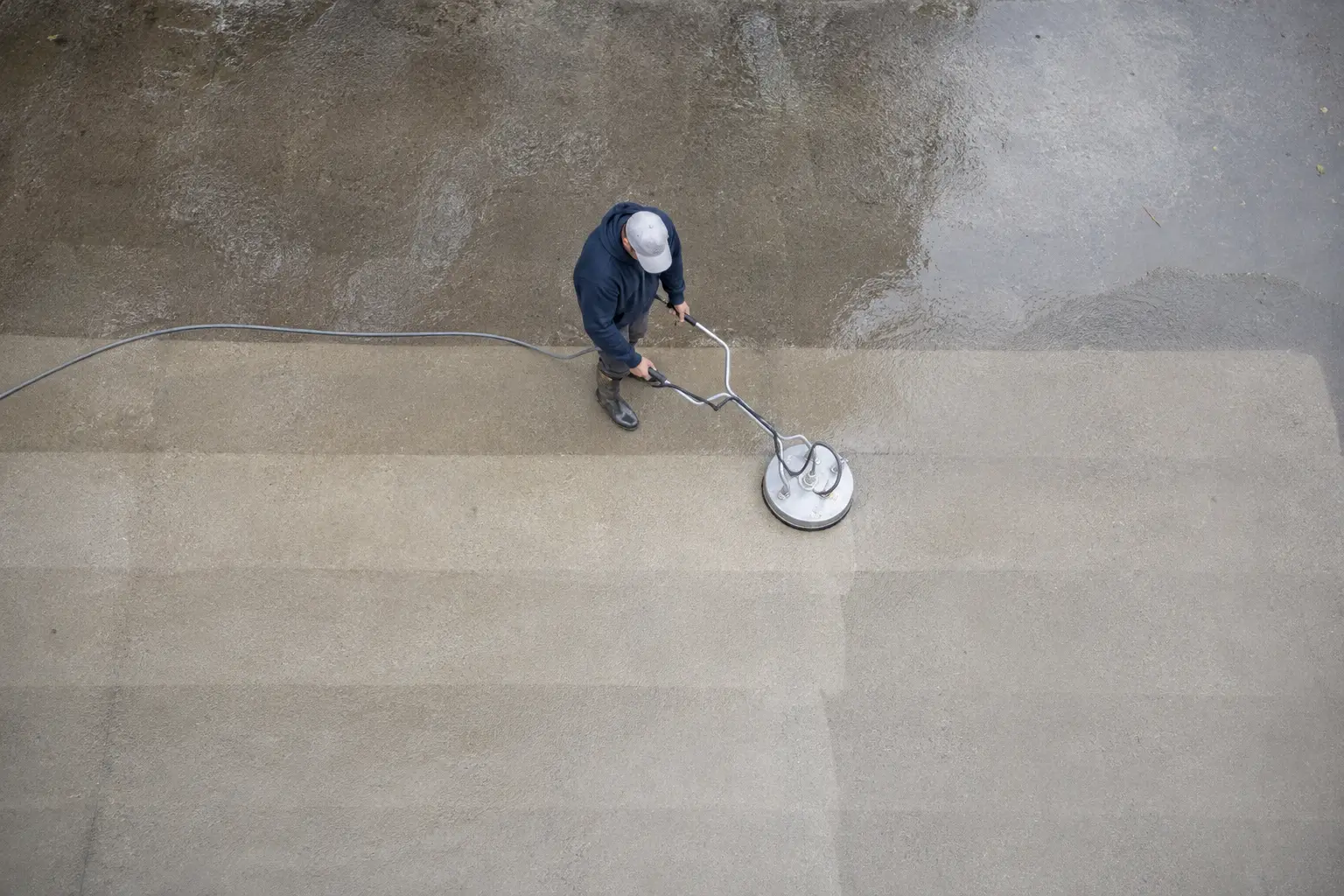
Verify engine speed, water supply, pump output, nozzle condition, equal tip sizing, free bar rotation, correct swivel operation, and that the cleaner matches actual machine flow.
Keep a repeatable walking pace, overlap passes, avoid long stationary dwell, and manage hose drag. Crosshatching may help only after equipment and chemistry are correct.
Appropriate pretreatment can loosen organic soil so the cleaner works evenly. Follow the product label, manage plants and runoff, allow correct dwell, and prevent drying.
Repeated aggressive passes can etch the cement paste and create permanent contrast. If the pattern remains after drying, reassess surface damage, previous cleaning, curing, or inconsistent concrete.
Surface condition, finish, soil type, water supply, access, drainage, equipment condition, nozzle and flow, chemical compatibility, operator technique, and local requirements can all change the correct decision.
Verify the exact material, existing damage, manufacturer instructions, product labels, PPE, water and electrical hazards, runoff controls, a safe test area, and the limits of your training.
Stop when the material or coating is unknown or unstable, access is unsafe, runoff cannot be controlled, electrical or water-intrusion risk remains, or the test area shows damage or an unexpected reaction.
General guidance cannot account for every surface, product, site, or local requirement. Follow equipment manuals and chemical labels, use appropriate PPE, test first, control runoff, and hire qualified help when conditions exceed your training or safe access.