Cleaning methods
Understand when controlled pressure, heated power washing, or low-pressure chemical cleaning fits the material and contamination.
These guides organize the decisions that cause the most confusion, wasted money, damaged surfaces, and weak job margins. Each starts with the direct answer, then defines limits, risks, method, and verification.
Use a guide to narrow the decision—not to skip an onsite test, manufacturer instructions, PPE, chemical labels, or local requirements.
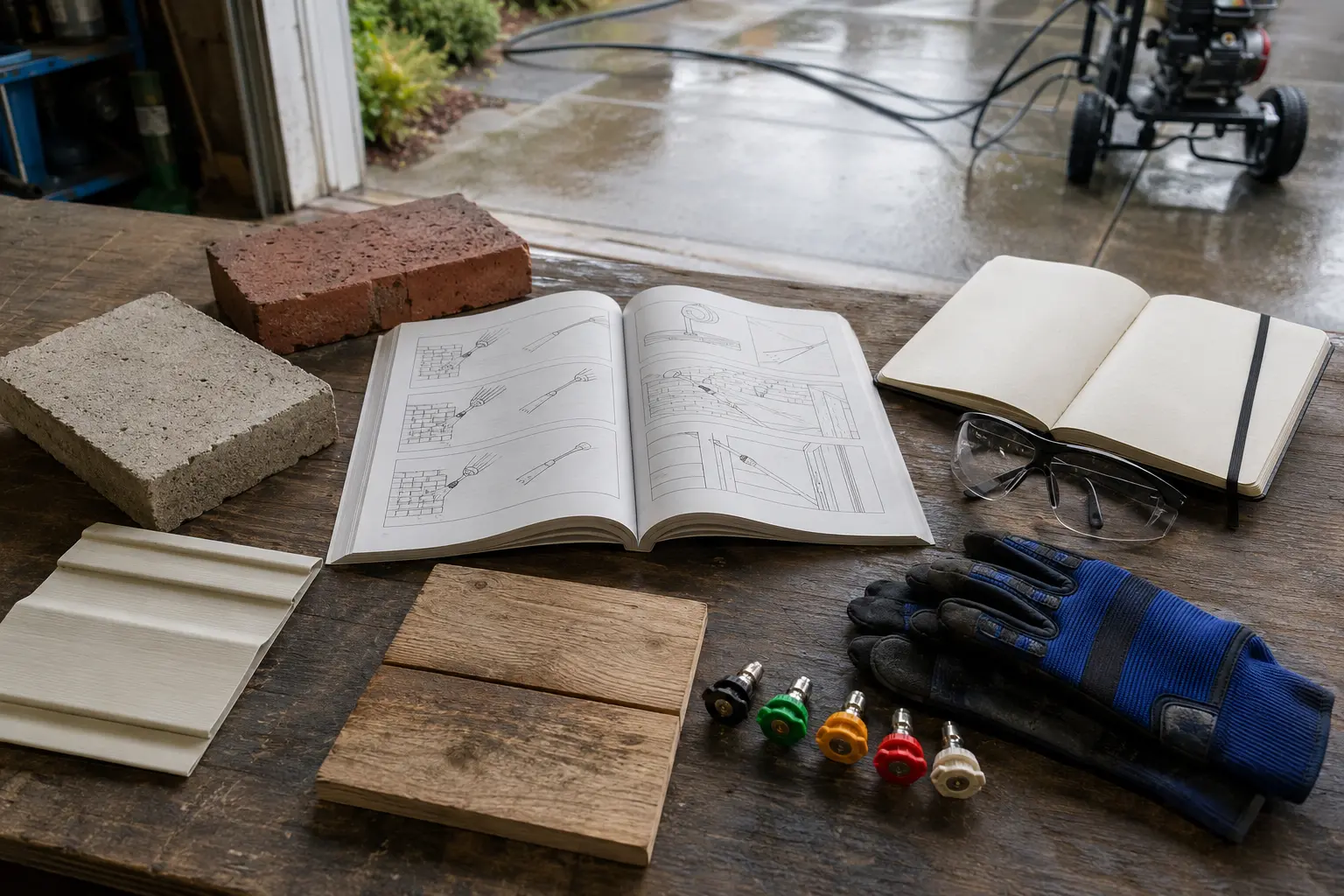
Pressure washing uses unheated pressurized water; power washing adds heat; soft washing relies on lower pressure, suitable chemistry, and dwell time. The safest effective choice depends on surface tolerance and soil type.
Read the complete guide Concrete safetyThere is no universally safe PSI for concrete. Sound, fully cured concrete can often tolerate professional surface cleaning, but age, mix, finish, damage, sealer, nozzle, distance, flow, and technique change the risk.
Read the complete guide Equipment sizingMany new operators benefit more from dependable flow than headline PSI. A common professional planning range begins around 4 GPM, while higher-flow systems can increase flatwork speed if water supply, hose, surface cleaner, vehicle, and jobs support them.
Read the complete guide Buyer comparisonElectric pressure washers fit lighter, intermittent homeowner work near power; gas machines provide more mobility and output for larger or repeated jobs but require fuel, ventilation, maintenance, storage, and greater damage control.
Read the complete guide Estimating systemPrice from total operating cost, required labor, setup, travel, chemistry, equipment recovery, risk, overhead, and target margin. Use square footage as one input and a market cross-check—not the entire formula.
Read the complete guide Flatwork troubleshootingConcrete stripes usually point to uneven overlap, inconsistent pace, incorrect surface-cleaner sizing, worn or blocked tips, inadequate flow, uneven bar rotation, or soil that needed better pretreatment.
Read the complete guide Startup essentialsA working setup needs more than a pressure washer: reliable water delivery, correctly sized nozzles, rated hose and fittings, surface-appropriate accessories, PPE, chemical controls, maintenance supplies, and documentation.
Read the complete guide Business foundationStart by defining a narrow safe service offer, verifying legal and insurance requirements, learning surface-specific methods, calculating true job cost, and building a repeatable system for estimates, documentation, customer acquisition, and maintenance.
Read the complete guide Cost planningCost per square foot is a useful planning metric, but there is no honest universal national rate. Surface type, scope, minimum charge, soil, access, chemistry, risk, travel, regional cost, and contractor systems change the final price.
Read the complete guide Accessory compatibilityMatch surface-cleaner diameter to actual machine GPM, pressure, nozzle orifice, and job type. An oversized cleaner may spin but clean slowly or leave stripes; an undersized one can waste output and become difficult to control.
Read the complete guide Wood riskA concentrated jet can erode soft grain, raise fibers, carve lines, drive water into joints, strip finish unevenly, and leave a surface that requires sanding or refinishing.
Read the complete guide Risk-based methodSoft washing is generally safer when cleaning depends on treating biological growth and the surface or building envelope could be damaged by concentrated mechanical force.
Read the complete guideUnderstand when controlled pressure, heated power washing, or low-pressure chemical cleaning fits the material and contamination.
Compare GPM, pressure, duty cycle, water supply, serviceability, and accessory compatibility by buyer type.
Build quotes from true operating cost, risk, market conditions, and a defined margin rather than copied square-foot rates.
Every process should end with inspection: consistent cleaning, no new damage, managed runoff, restored property, and documented customer acceptance.
Surface condition, finish, soil type, water supply, access, drainage, equipment condition, nozzle and flow, chemical compatibility, operator technique, and local requirements can all change the correct decision.
Verify the exact material, existing damage, manufacturer instructions, product labels, PPE, water and electrical hazards, runoff controls, a safe test area, and the limits of your training.
Stop when the material or coating is unknown or unstable, access is unsafe, runoff cannot be controlled, electrical or water-intrusion risk remains, or the test area shows damage or an unexpected reaction.
General guidance cannot account for every surface, product, site, or local requirement. Follow equipment manuals and chemical labels, use appropriate PPE, test first, control runoff, and hire qualified help when conditions exceed your training or safe access.