When pressure washing fits
Sound concrete, some masonry, and durable flatwork may respond well when nozzle, distance, flow, technique, drainage, and surface condition are controlled.
Pressure washing uses unheated pressurized water; power washing adds heat; soft washing relies on lower pressure, suitable chemistry, and dwell time. The safest effective choice depends on surface tolerance and soil type.
Use controlled pressure for sound hard surfaces, heat when oily contamination and site controls justify it, and soft washing where high pressure could damage the material or building envelope.
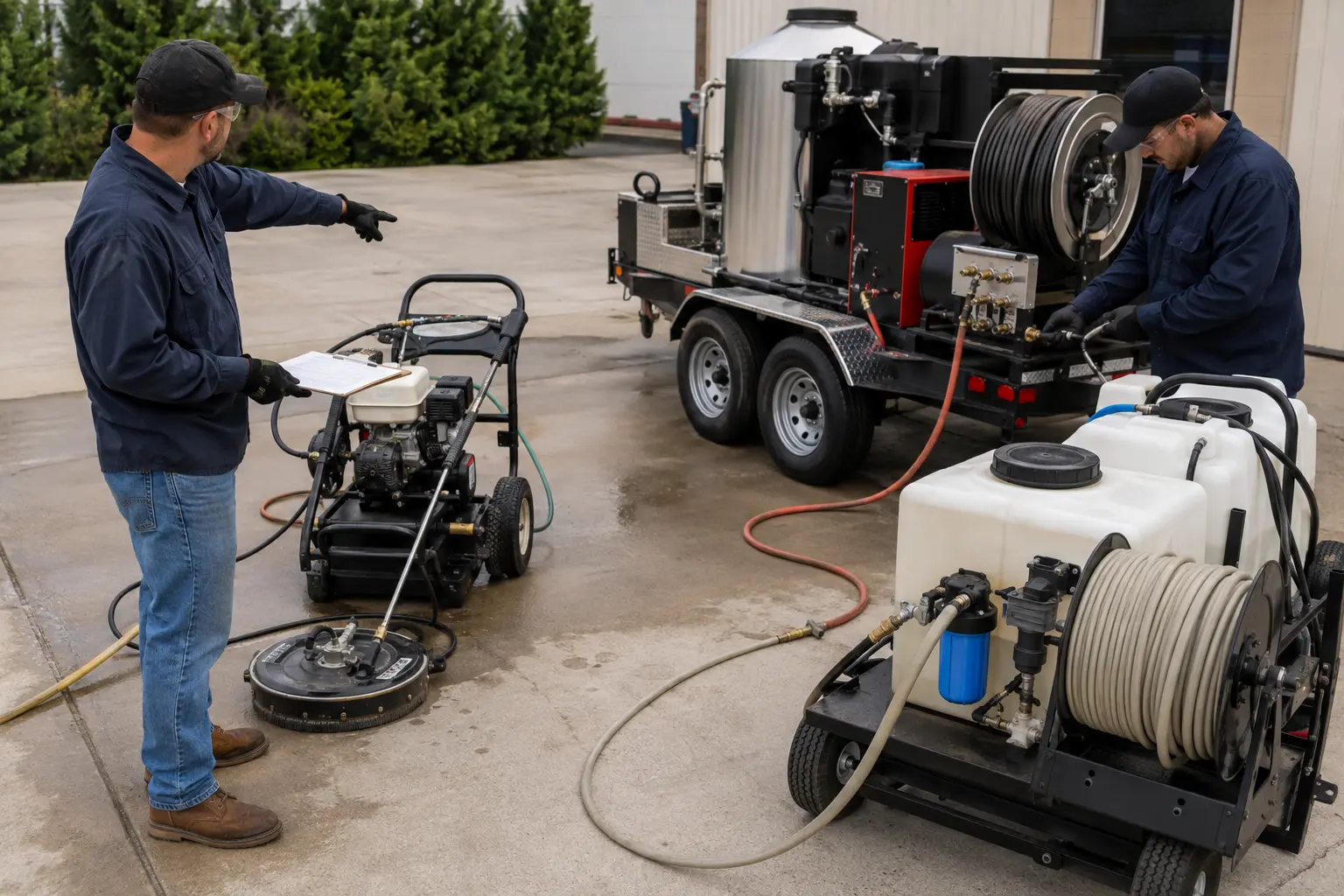
Sound concrete, some masonry, and durable flatwork may respond well when nozzle, distance, flow, technique, drainage, and surface condition are controlled.
Hot water can improve removal of grease and oil but adds burn, coating, equipment, fuel, and wastewater considerations. Confirm the site can support it.
Roofs, many siding conditions, delicate coatings, and biological growth often call for low-pressure treatment. Follow chemical labels, protect plants and metals, control runoff, and rinse correctly.
No method is safe for every surface. Stop if the substrate is loose, oxidized, delaminating, leaking, electrically hazardous, or otherwise cannot be tested and protected.
Surface condition, finish, soil type, water supply, access, drainage, equipment condition, nozzle and flow, chemical compatibility, operator technique, and local requirements can all change the correct decision.
Verify the exact material, existing damage, manufacturer instructions, product labels, PPE, water and electrical hazards, runoff controls, a safe test area, and the limits of your training.
Stop when the material or coating is unknown or unstable, access is unsafe, runoff cannot be controlled, electrical or water-intrusion risk remains, or the test area shows damage or an unexpected reaction.
General guidance cannot account for every surface, product, site, or local requirement. Follow equipment manuals and chemical labels, use appropriate PPE, test first, control runoff, and hire qualified help when conditions exceed your training or safe access.