Estimating resources
Calculate direct cost, labor, travel, equipment recovery, risk allowance, break-even, quote range, expected gross profit, and margin from explicit inputs.
Use planning tools to expose assumptions, standardize repeatable work, and improve decisions. No calculator can replace an onsite inspection, legal requirements, training, or operator judgment.
Start with the Job & Profit Engine. Then support the estimate with pre-inspection documentation, maintenance records, chemical inventory, route planning, and local-search diagnostics.
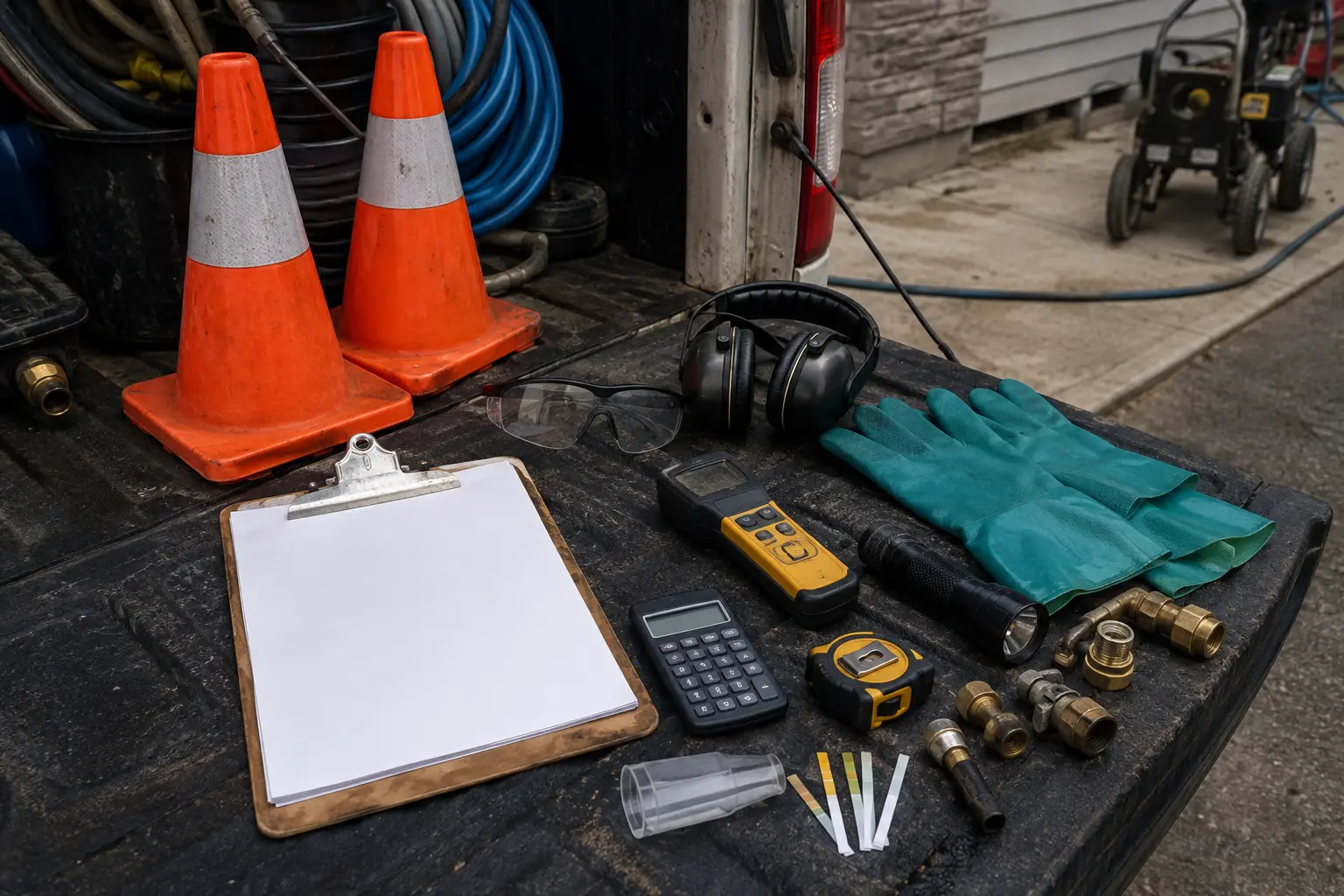
Model operating cost, risk allowance, minimum charge, quote range, expected gross profit, margin, and price per square foot from your inputs.
Build a planning quote Printable field controlDocument 16 surface, access, utility, drainage, protection, method, test-area, and stop-condition checks before pricing.
Start the inspectionCalculate direct cost, labor, travel, equipment recovery, risk allowance, break-even, quote range, expected gross profit, and margin from explicit inputs.
Record surface condition, prior damage, access, drainage, water source, nearby items, customer expectations, exclusions, test-area result, and completion verification.
Track engine and pump hours, oil intervals, unloader behavior, belt condition, leaks, nozzle wear, hose damage, chemical exposure, repairs, and downtime.
Local-search and measurement resources should expose assumptions, separate verified facts from recommendations, and connect every diagnostic finding to a defined operator action. Brand-specific tools are evaluated only when they directly match that standard.
Surface condition, finish, soil type, water supply, access, drainage, equipment condition, nozzle and flow, chemical compatibility, operator technique, and local requirements can all change the correct decision.
Verify the exact material, existing damage, manufacturer instructions, product labels, PPE, water and electrical hazards, runoff controls, a safe test area, and the limits of your training.
Stop when the material or coating is unknown or unstable, access is unsafe, runoff cannot be controlled, electrical or water-intrusion risk remains, or the test area shows damage or an unexpected reaction.
General guidance cannot account for every surface, product, site, or local requirement. Follow equipment manuals and chemical labels, use appropriate PPE, test first, control runoff, and hire qualified help when conditions exceed your training or safe access.