Pressure washing
Best suited to durable, sound surfaces when flow, nozzle angle, distance, and dwell time are controlled. Concrete age, joints, coatings, surrounding drainage, and prior damage still matter.
Use the least aggressive method that can remove the contamination without exceeding the surface’s tolerance. High pressure is one option—not the default answer for every job.
Start with surface identification and a test area. Use controlled pressure on sound hard surfaces; favor soft washing or low-pressure chemical cleaning when pressure could scar, strip, oxidize, or force water behind the material.
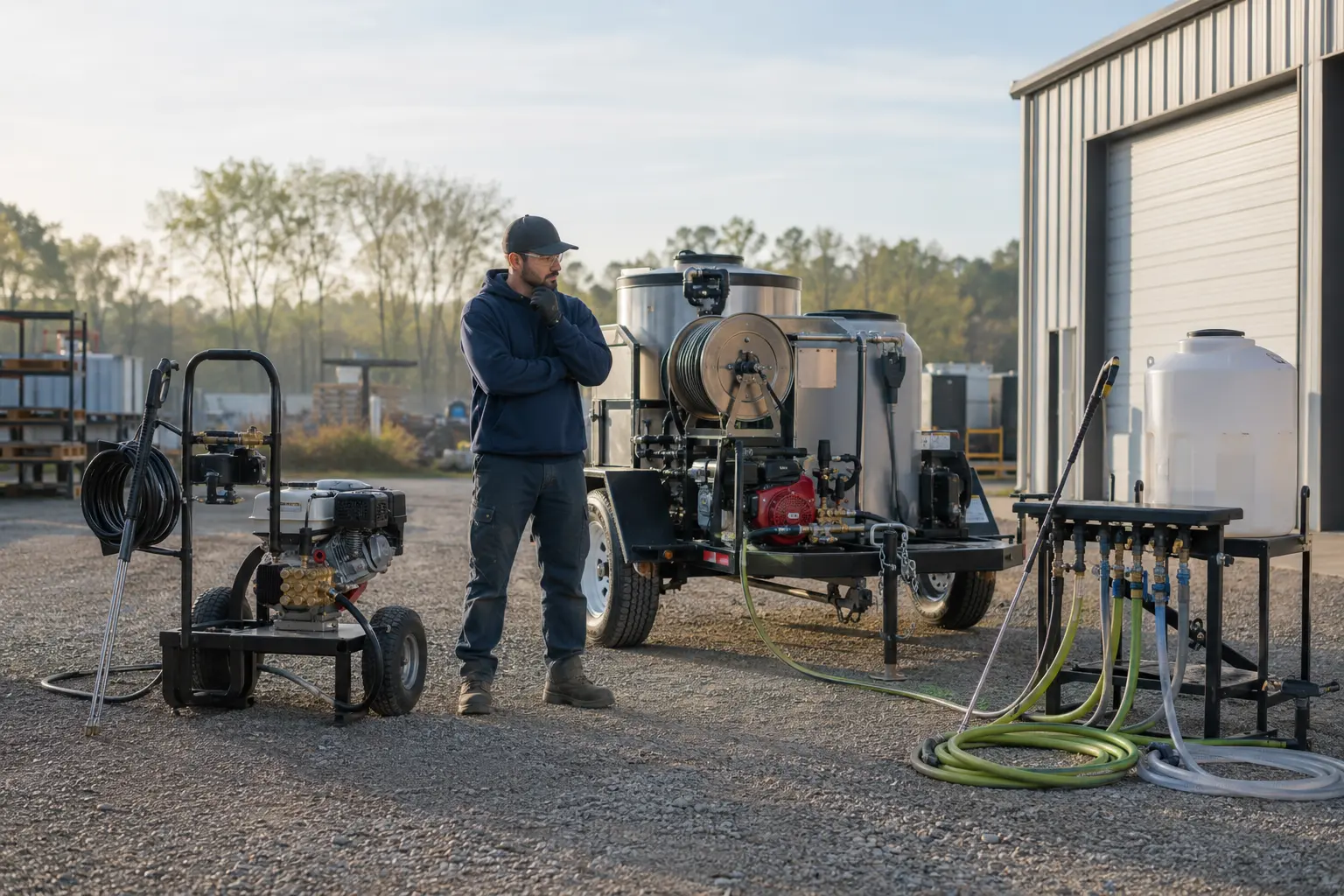
Best suited to durable, sound surfaces when flow, nozzle angle, distance, and dwell time are controlled. Concrete age, joints, coatings, surrounding drainage, and prior damage still matter.
A system for surfaces or soils that respond better to chemistry and dwell time than mechanical force. Chemical choice, concentration, plant protection, runoff control, and complete rinsing remain essential.
Heated water can help with oily or greasy contamination, especially in some commercial settings. Heat adds equipment, burn, coating, and runoff considerations; it is not simply a stronger residential wash.
The surface is unstable, coating adhesion is unknown, electrical or water-intrusion hazards cannot be controlled, runoff cannot be managed, or the operator lacks the correct PPE and chemical knowledge.
Surface condition, finish, soil type, water supply, access, drainage, equipment condition, nozzle and flow, chemical compatibility, operator technique, and local requirements can all change the correct decision.
Verify the exact material, existing damage, manufacturer instructions, product labels, PPE, water and electrical hazards, runoff controls, a safe test area, and the limits of your training.
Stop when the material or coating is unknown or unstable, access is unsafe, runoff cannot be controlled, electrical or water-intrusion risk remains, or the test area shows damage or an unexpected reaction.
General guidance cannot account for every surface, product, site, or local requirement. Follow equipment manuals and chemical labels, use appropriate PPE, test first, control runoff, and hire qualified help when conditions exceed your training or safe access.