Hard mineral surfaces
Sound concrete, masonry, and commercial pavement can tolerate controlled mechanical cleaning, but fresh concrete, weak mortar, exposed aggregate, damaged joints, sealers, and coatings change the decision.
The surface—not the machine—sets the operating limit. Identify material, age, condition, coating, contamination, drainage, and nearby property before selecting pressure, flow, nozzle, chemistry, and technique.
No PSI number is universally safe. A test area, conservative starting point, correct standoff distance, and constant visual verification are mandatory.
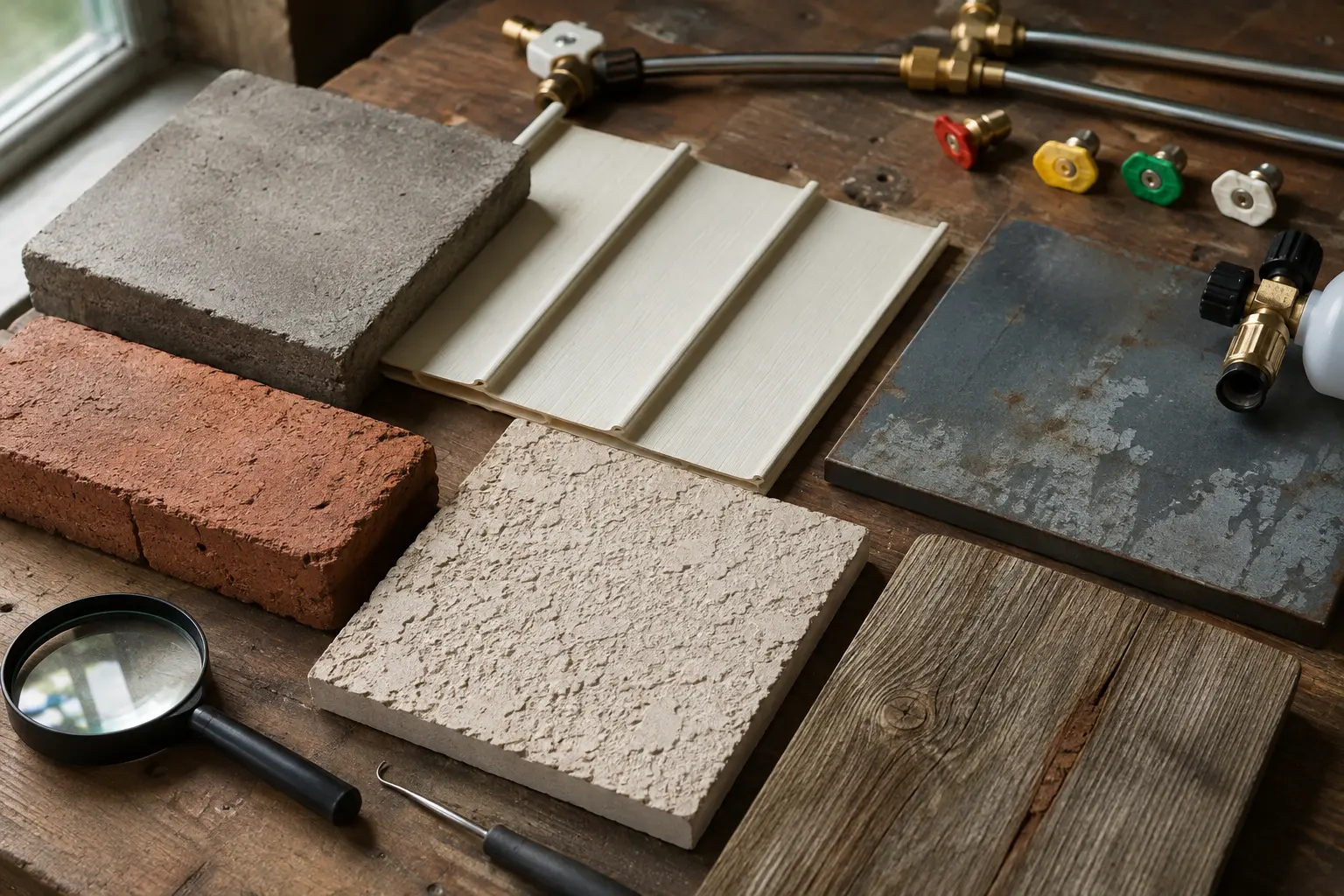
Sound concrete, masonry, and commercial pavement can tolerate controlled mechanical cleaning, but fresh concrete, weak mortar, exposed aggregate, damaged joints, sealers, and coatings change the decision.
Use low pressure and prevent upward spray behind laps, vents, flashing, doors, and windows. Oxidized siding can show permanent wand marks even at pressures that do not physically break the panel.
Wood fibers, soft grain, stain, paint, and weathered boards can be cut or raised quickly. Chemistry, dwell, gentle rinse, and post-clean neutralization may be more important than pressure.
Avoid treating roofing like pavement. Manufacturer guidance, fall protection, runoff management, chemical control, and low-pressure application are central. Hire a qualified professional when access or material conditions are uncertain.
Surface condition, finish, soil type, water supply, access, drainage, equipment condition, nozzle and flow, chemical compatibility, operator technique, and local requirements can all change the correct decision.
Verify the exact material, existing damage, manufacturer instructions, product labels, PPE, water and electrical hazards, runoff controls, a safe test area, and the limits of your training.
Stop when the material or coating is unknown or unstable, access is unsafe, runoff cannot be controlled, electrical or water-intrusion risk remains, or the test area shows damage or an unexpected reaction.
General guidance cannot account for every surface, product, site, or local requirement. Follow equipment manuals and chemical labels, use appropriate PPE, test first, control runoff, and hire qualified help when conditions exceed your training or safe access.