Homeowner quote comparison
Confirm which surfaces, preparation, treatment, rinsing, plant protection, cleanup, and post-treatment are included. Ask how the contractor handles oxidation, fragile materials, drainage, and existing damage.
Pressure-washing prices vary because the same square footage can require very different labor, chemistry, travel, access, protection, runoff control, equipment, and risk. Compare the scope—not just the total.
A square-foot rate is a useful cross-check, not a complete pricing system. Minimum service charges and job-specific adjustments prevent small, difficult, or distant work from being priced below operating cost.
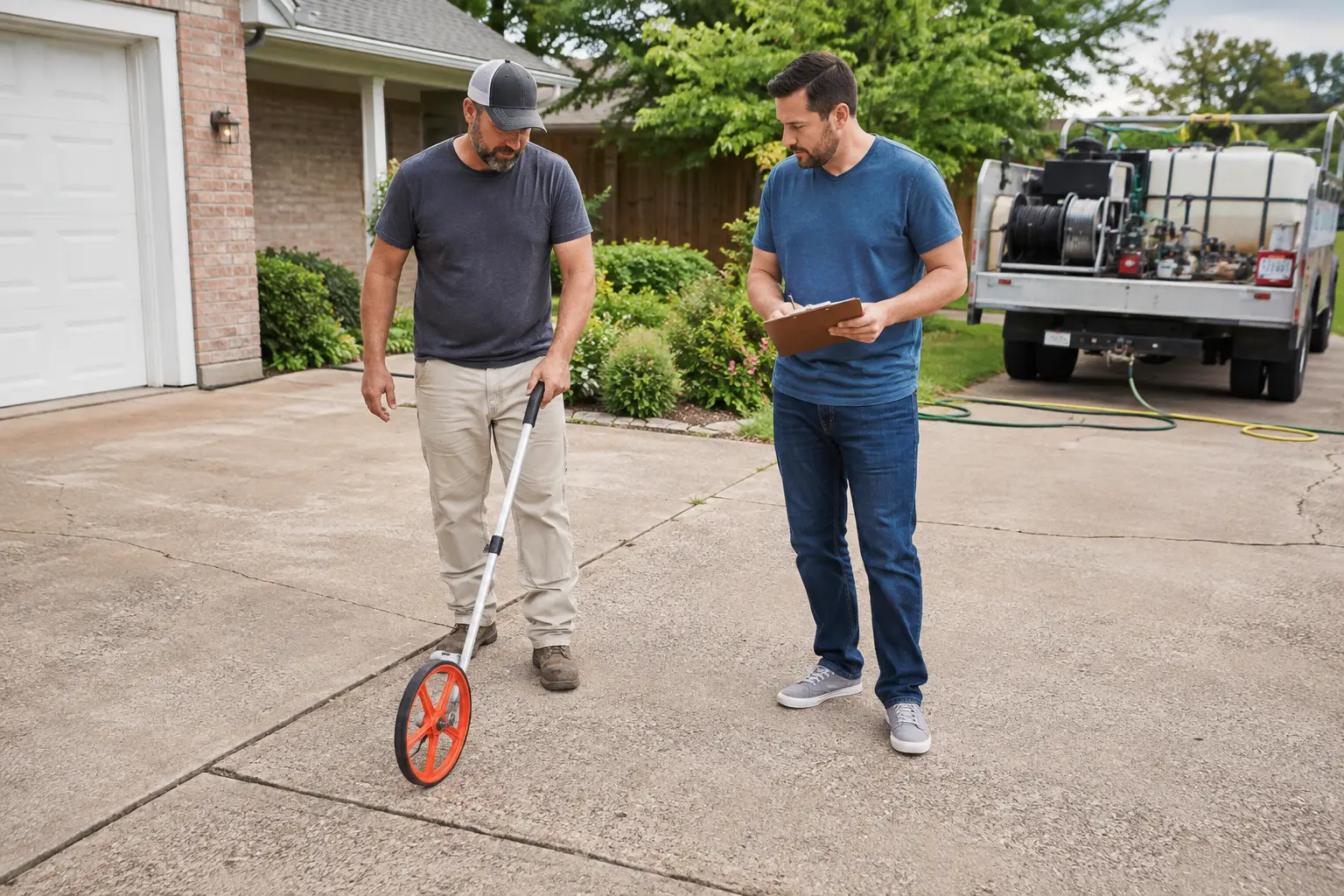
Confirm which surfaces, preparation, treatment, rinsing, plant protection, cleanup, and post-treatment are included. Ask how the contractor handles oxidation, fragile materials, drainage, and existing damage.
Price must recover labor, payroll burden, chemicals, fuel, water, travel, equipment wear, maintenance, insurance, administration, rework exposure, taxes, and a sustainable profit—not just time on the trigger.
Commercial work may add documentation, off-hours scheduling, hot-water needs, recovery requirements, traffic control, higher insurance limits, prevailing processes, and longer payment terms.
National ranges are planning references only. Wage levels, fuel, water restrictions, insurance, competition, density, climate, seasonality, and disposal rules vary by market.
Surface condition, finish, soil type, water supply, access, drainage, equipment condition, nozzle and flow, chemical compatibility, operator technique, and local requirements can all change the correct decision.
Verify the exact material, existing damage, manufacturer instructions, product labels, PPE, water and electrical hazards, runoff controls, a safe test area, and the limits of your training.
Stop when the material or coating is unknown or unstable, access is unsafe, runoff cannot be controlled, electrical or water-intrusion risk remains, or the test area shows damage or an unexpected reaction.
General guidance cannot account for every surface, product, site, or local requirement. Follow equipment manuals and chemical labels, use appropriate PPE, test first, control runoff, and hire qualified help when conditions exceed your training or safe access.