Measure and define scope
Record surface dimensions, contamination, access, water, drainage, obstacles, protection, timing, customer priorities, exclusions, and completion criteria before pricing.
Price from total operating cost, required labor, setup, travel, chemistry, equipment recovery, risk, overhead, and target margin. Use square footage as one input and a market cross-check—not the entire formula.
Calculate break-even first. Apply the minimum service charge, adjust for risk and access, then test the quote against local alternatives and the value of the complete scope.
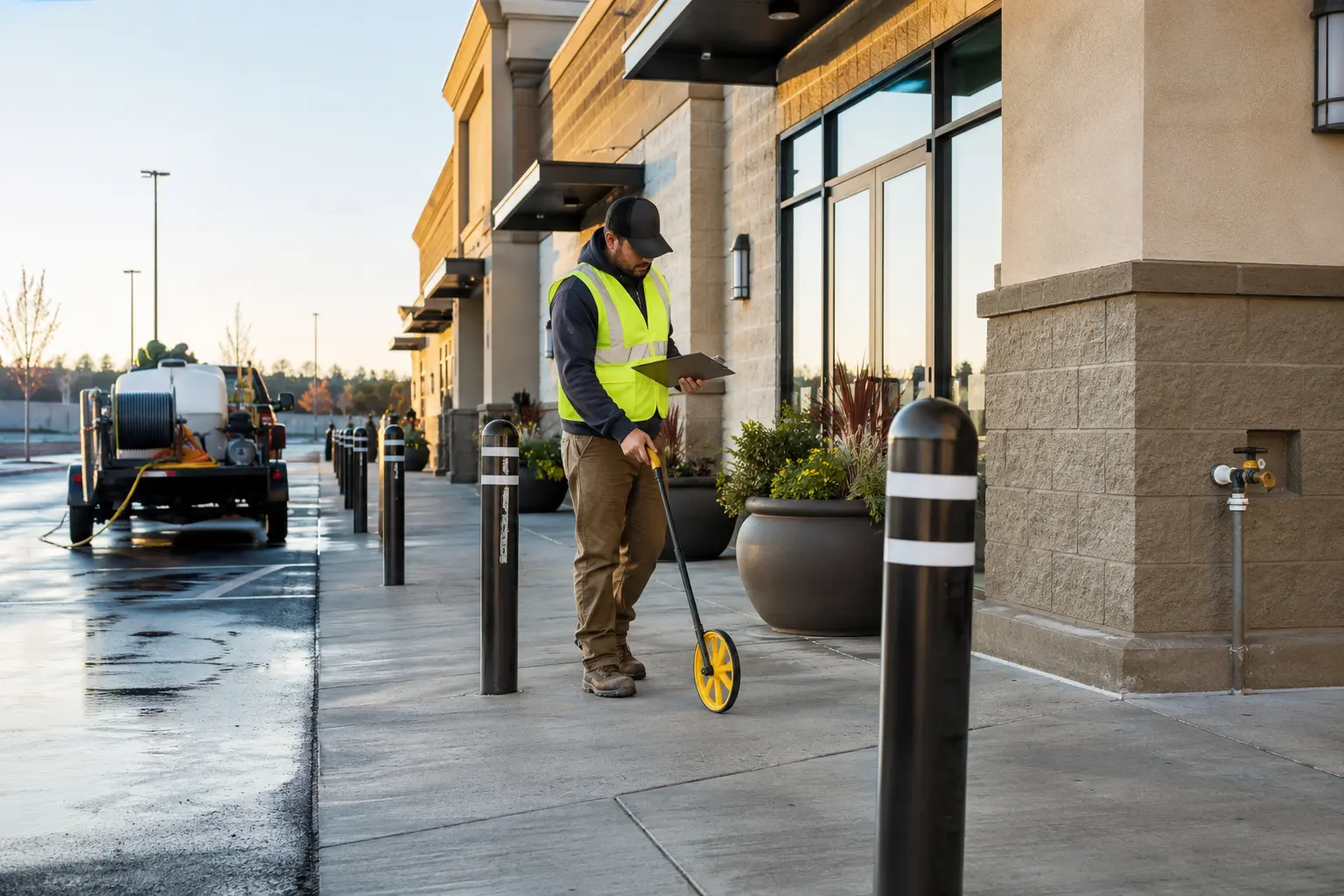
Record surface dimensions, contamination, access, water, drainage, obstacles, protection, timing, customer priorities, exclusions, and completion criteria before pricing.
Include paid labor time, payroll burden, chemicals, fuel, water, vehicle cost, travel time, equipment wear, insurance, administration, and a reasonable callback allowance.
A 40% markup on $300 cost creates a $420 price and a 28.6% gross margin. To target a 40% margin, divide $300 by 0.60 for a $500 planning price.
Check the minimum charge, price per square foot, expected gross profit, time capacity, risk exposure, payment terms, and assumptions. Inspect again if any major condition remains unknown.
Surface condition, finish, soil type, water supply, access, drainage, equipment condition, nozzle and flow, chemical compatibility, operator technique, and local requirements can all change the correct decision.
Verify the exact material, existing damage, manufacturer instructions, product labels, PPE, water and electrical hazards, runoff controls, a safe test area, and the limits of your training.
Stop when the material or coating is unknown or unstable, access is unsafe, runoff cannot be controlled, electrical or water-intrusion risk remains, or the test area shows damage or an unexpected reaction.
General guidance cannot account for every surface, product, site, or local requirement. Follow equipment manuals and chemical labels, use appropriate PPE, test first, control runoff, and hire qualified help when conditions exceed your training or safe access.