Why PSI alone misleads
Impact is shaped by nozzle orifice, spray angle, standoff distance, flow, dwell, rotation, and operator pace. A smaller concentrated jet can cut even when the machine’s rating sounds moderate.
There is no universally safe PSI for concrete. Sound, fully cured concrete can often tolerate professional surface cleaning, but age, mix, finish, damage, sealer, nozzle, distance, flow, and technique change the risk.
Begin conservatively, use an appropriate surface cleaner or wide fan pattern, maintain distance and motion, test inconspicuously, and stop if paste, aggregate, color, coating, or joint material changes.
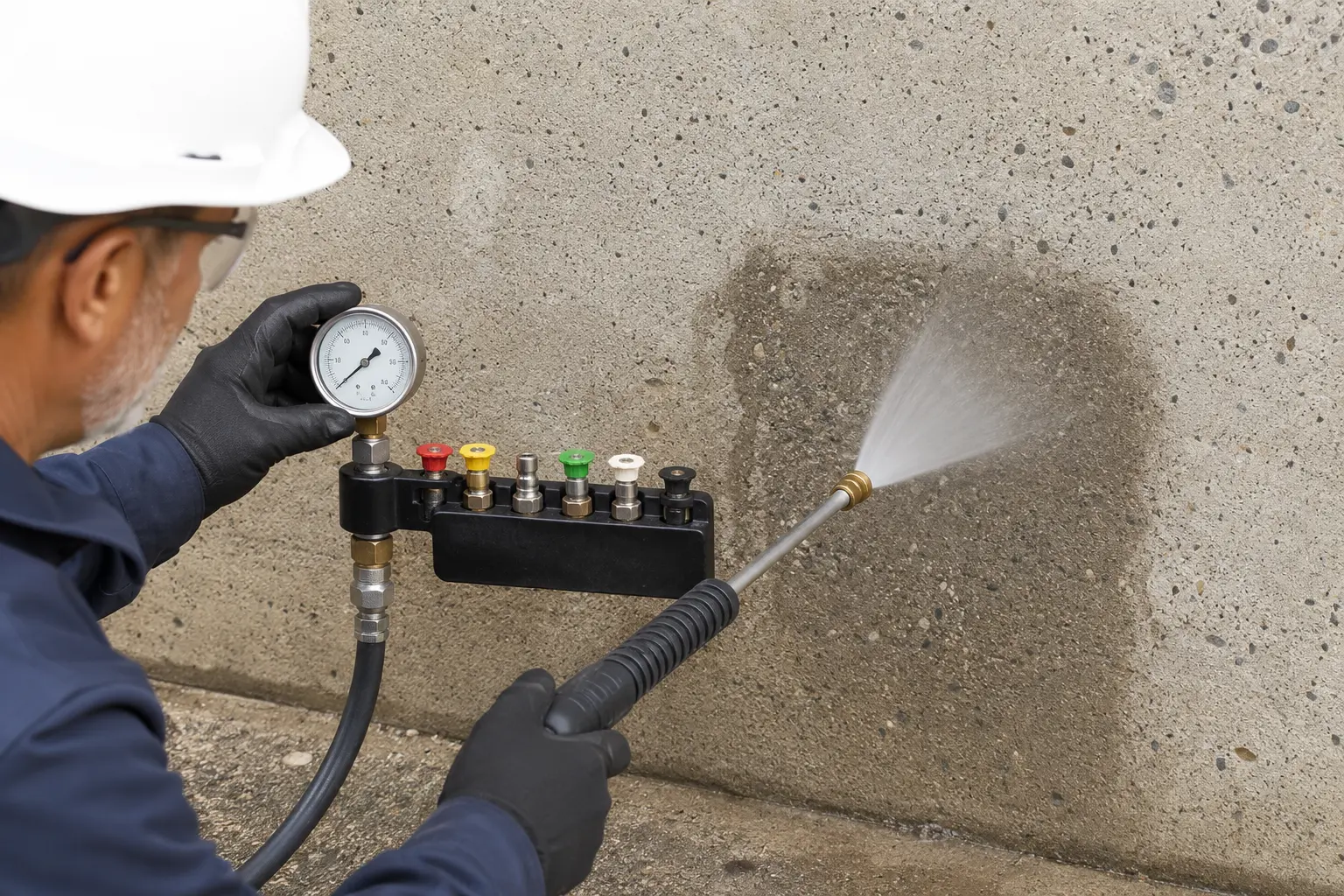
Impact is shaped by nozzle orifice, spray angle, standoff distance, flow, dwell, rotation, and operator pace. A smaller concentrated jet can cut even when the machine’s rating sounds moderate.
New, poorly finished, spalled, etched, freeze-damaged, or chemically weakened concrete requires special caution. Verify curing and condition; delay or use a gentler method when uncertain.
Pretreat appropriate organic soil, test, clean at a steady pace with even overlap, rinse, inspect at multiple angles, and post-treat only when the product label and runoff controls allow it.
Hire qualified help for unknown coatings, historic masonry, extensive oil, exposed aggregate concerns, steep drainage, adjacent sensitive property, or any condition you cannot safely contain.
Surface condition, finish, soil type, water supply, access, drainage, equipment condition, nozzle and flow, chemical compatibility, operator technique, and local requirements can all change the correct decision.
Verify the exact material, existing damage, manufacturer instructions, product labels, PPE, water and electrical hazards, runoff controls, a safe test area, and the limits of your training.
Stop when the material or coating is unknown or unstable, access is unsafe, runoff cannot be controlled, electrical or water-intrusion risk remains, or the test area shows damage or an unexpected reaction.
General guidance cannot account for every surface, product, site, or local requirement. Follow equipment manuals and chemical labels, use appropriate PPE, test first, control runoff, and hire qualified help when conditions exceed your training or safe access.