Choose the first services
Select surfaces you can inspect, test, clean, and verify safely. State exclusions. Avoid roofs, delicate coatings, restoration work, or complex commercial recovery until training and systems support them.
Start by defining a narrow safe service offer, verifying legal and insurance requirements, learning surface-specific methods, calculating true job cost, and building a repeatable system for estimates, documentation, customer acquisition, and maintenance.
Do not buy a large rig before proving demand and competence. A smaller reliable launch with disciplined pricing and documentation is stronger than debt-funded capacity without customers.
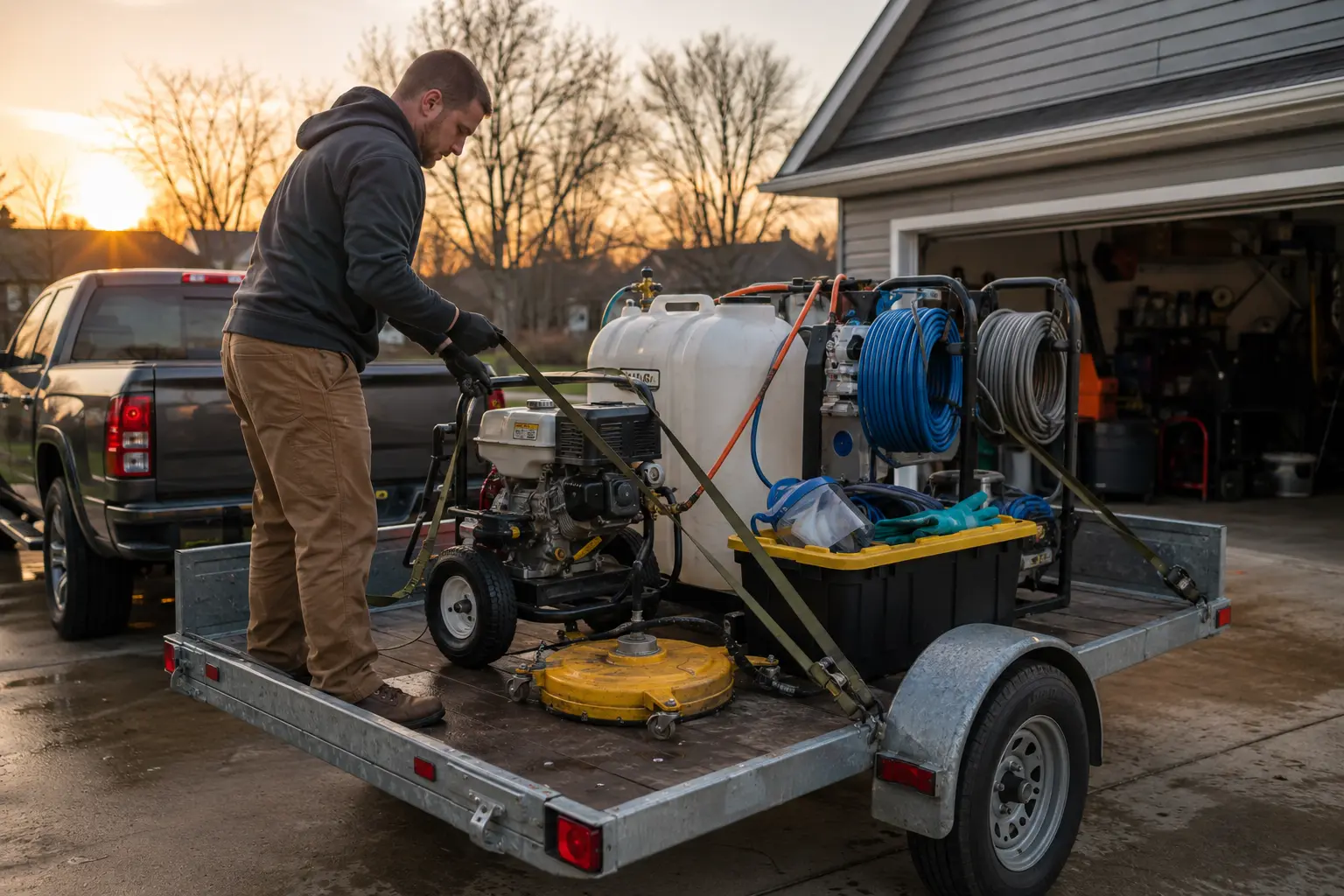
Select surfaces you can inspect, test, clean, and verify safely. State exclusions. Avoid roofs, delicate coatings, restoration work, or complex commercial recovery until training and systems support them.
Verify registration, tax, licensing, environmental, wastewater, transport, labor, and insurance obligations with qualified local sources. Use contracts and keep condition photographs.
Create the real local operating brand, Google Business Profile, service evidence, accurate website, review process, referral relationships, follow-up, and a small route-focused outreach plan.
Measure lead source, close rate, average ticket, direct cost, gross margin, route density, callback rate, equipment downtime, cash timing, and owner hours. Scale only from verified economics.
Surface condition, finish, soil type, water supply, access, drainage, equipment condition, nozzle and flow, chemical compatibility, operator technique, and local requirements can all change the correct decision.
Verify the exact material, existing damage, manufacturer instructions, product labels, PPE, water and electrical hazards, runoff controls, a safe test area, and the limits of your training.
Stop when the material or coating is unknown or unstable, access is unsafe, runoff cannot be controlled, electrical or water-intrusion risk remains, or the test area shows damage or an unexpected reaction.
General guidance cannot account for every surface, product, site, or local requirement. Follow equipment manuals and chemical labels, use appropriate PPE, test first, control runoff, and hire qualified help when conditions exceed your training or safe access.