Why small jobs cost more per foot
Travel, setup, protection, paperwork, equipment loading, and payment collection happen even when the cleanable area is small. Minimum charges recover that fixed effort.
Cost per square foot is a useful planning metric, but there is no honest universal national rate. Surface type, scope, minimum charge, soil, access, chemistry, risk, travel, regional cost, and contractor systems change the final price.
Homeowners should compare identical scopes. Contractors should calculate operating cost and time first, then use the resulting square-foot equivalent as a market and consistency check.
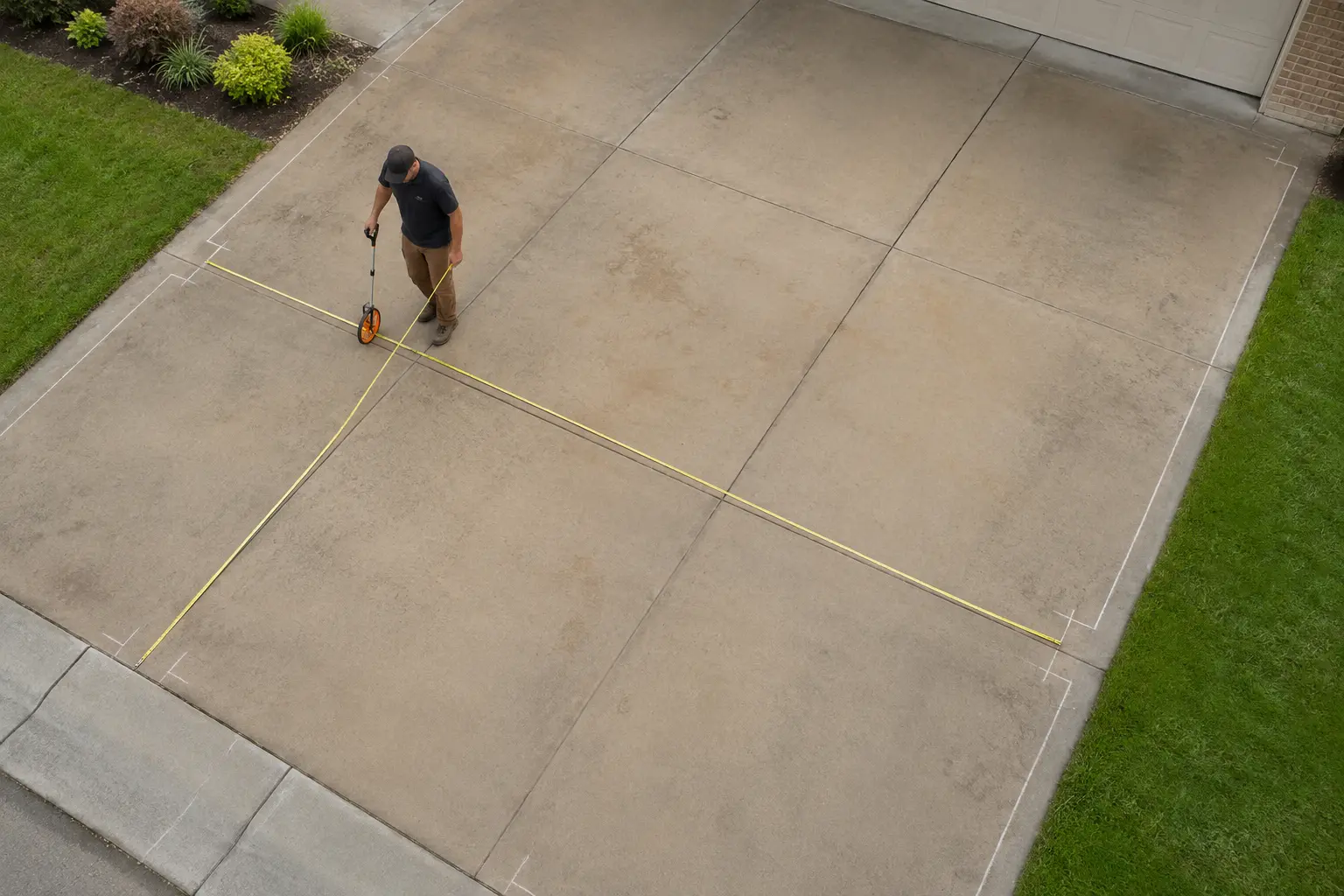
Travel, setup, protection, paperwork, equipment loading, and payment collection happen even when the cleanable area is small. Minimum charges recover that fixed effort.
Heavy organic growth, oil, rust, difficult access, water limitations, multi-level work, fragile surroundings, night scheduling, traffic control, recovery requirements, and long travel all add cost.
Large open pavement may gain production efficiency, while commercial documentation, hot water, recovery, timing, insurance, and payment terms may offset volume savings.
Use local insured contractor quotes and actual operating data. National figures cannot represent every wage, insurance, water, fuel, regulatory, density, and competition condition.
Surface condition, finish, soil type, water supply, access, drainage, equipment condition, nozzle and flow, chemical compatibility, operator technique, and local requirements can all change the correct decision.
Verify the exact material, existing damage, manufacturer instructions, product labels, PPE, water and electrical hazards, runoff controls, a safe test area, and the limits of your training.
Stop when the material or coating is unknown or unstable, access is unsafe, runoff cannot be controlled, electrical or water-intrusion risk remains, or the test area shows damage or an unexpected reaction.
General guidance cannot account for every surface, product, site, or local requirement. Follow equipment manuals and chemical labels, use appropriate PPE, test first, control runoff, and hire qualified help when conditions exceed your training or safe access.