Electric buyer fit
Good for vehicles with proper technique, patio furniture, small patios, and light maintenance when cord, GFCI, water supply, and manufacturer limits are managed.
Electric pressure washers fit lighter, intermittent homeowner work near power; gas machines provide more mobility and output for larger or repeated jobs but require fuel, ventilation, maintenance, storage, and greater damage control.
Choose electric for convenience and modest scope. Choose gas when verified workload requires higher sustained output and you can safely maintain, transport, fuel, and operate it outdoors.
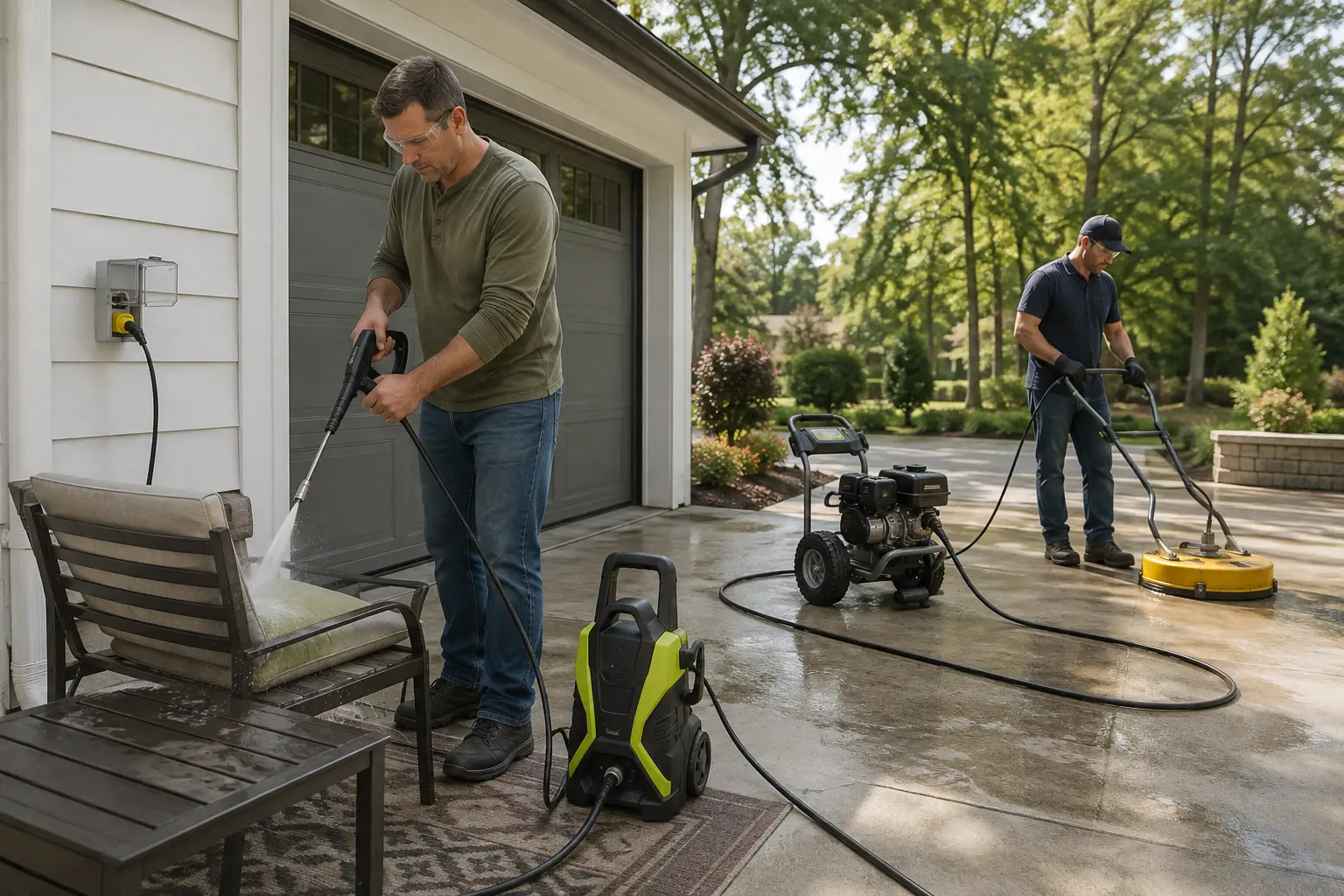
Good for vehicles with proper technique, patio furniture, small patios, and light maintenance when cord, GFCI, water supply, and manufacturer limits are managed.
Useful for larger flatwork and mobile jobs where output and duty cycle matter. Never run an engine in enclosed or poorly ventilated spaces due to carbon-monoxide risk.
Compare rated versus working output, duty cycle, pump type, hose length, fittings, service network, noise, storage, weight, and included accessories—not PSI alone.
Use rated hoses and accessories, correct nozzle sizes, eye and foot protection, stable water supply, and conservative test areas. Never direct spray at people, animals, electrical systems, or unstable surfaces.
Surface condition, finish, soil type, water supply, access, drainage, equipment condition, nozzle and flow, chemical compatibility, operator technique, and local requirements can all change the correct decision.
Verify the exact material, existing damage, manufacturer instructions, product labels, PPE, water and electrical hazards, runoff controls, a safe test area, and the limits of your training.
Stop when the material or coating is unknown or unstable, access is unsafe, runoff cannot be controlled, electrical or water-intrusion risk remains, or the test area shows damage or an unexpected reaction.
General guidance cannot account for every surface, product, site, or local requirement. Follow equipment manuals and chemical labels, use appropriate PPE, test first, control runoff, and hire qualified help when conditions exceed your training or safe access.