The practical relationship
More flow can support a wider cleaning path, but soil, pace, tip height, bar design, swivel condition, and pretreatment affect real production.
Match surface-cleaner diameter to actual machine GPM, pressure, nozzle orifice, and job type. An oversized cleaner may spin but clean slowly or leave stripes; an undersized one can waste output and become difficult to control.
Confirm the manufacturer’s flow range and calculate two matched bar nozzles from total GPM and target pressure. Do not choose diameter from engine horsepower or advertised PSI alone.
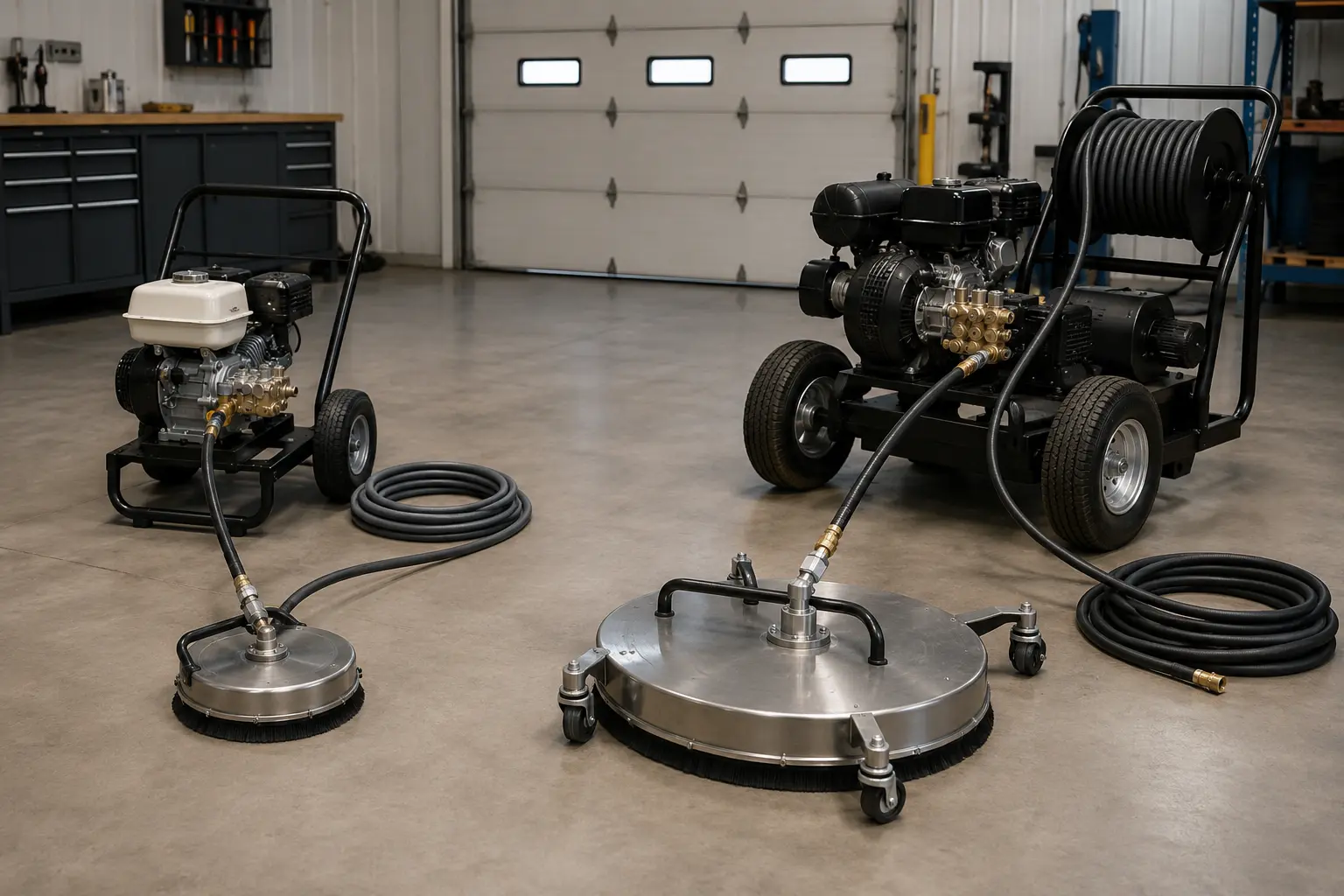
More flow can support a wider cleaning path, but soil, pace, tip height, bar design, swivel condition, and pretreatment affect real production.
A two-tip bar divides total flow between two nozzles. Both tips should match. Incorrect or worn tips change pressure, pattern, pump load, and stripe risk.
Actual output can fall below the machine label if supply is restricted, hose is undersized, filters clog, fittings restrict, or long runs add loss.
Verify continuous machine output and manufacturer compatibility. If specifications are unclear, use the smaller supported size or consult the equipment maker or competent dealer.
Surface condition, finish, soil type, water supply, access, drainage, equipment condition, nozzle and flow, chemical compatibility, operator technique, and local requirements can all change the correct decision.
Verify the exact material, existing damage, manufacturer instructions, product labels, PPE, water and electrical hazards, runoff controls, a safe test area, and the limits of your training.
Stop when the material or coating is unknown or unstable, access is unsafe, runoff cannot be controlled, electrical or water-intrusion risk remains, or the test area shows damage or an unexpected reaction.
General guidance cannot account for every surface, product, site, or local requirement. Follow equipment manuals and chemical labels, use appropriate PPE, test first, control runoff, and hire qualified help when conditions exceed your training or safe access.