What GPM changes
Higher flow carries removed soil and can increase rinse and surface-cleaning speed. Productivity gains depend on the entire system and job—not the pump number in isolation.
Many new operators benefit more from dependable flow than headline PSI. A common professional planning range begins around 4 GPM, while higher-flow systems can increase flatwork speed if water supply, hose, surface cleaner, vehicle, and jobs support them.
Buy the lowest system that performs your defined services profitably and reliably. Do not choose high flow until you verify supply, transport, buffer capacity, accessory sizing, maintenance, and demand.
Higher flow carries removed soil and can increase rinse and surface-cleaning speed. Productivity gains depend on the entire system and job—not the pump number in isolation.
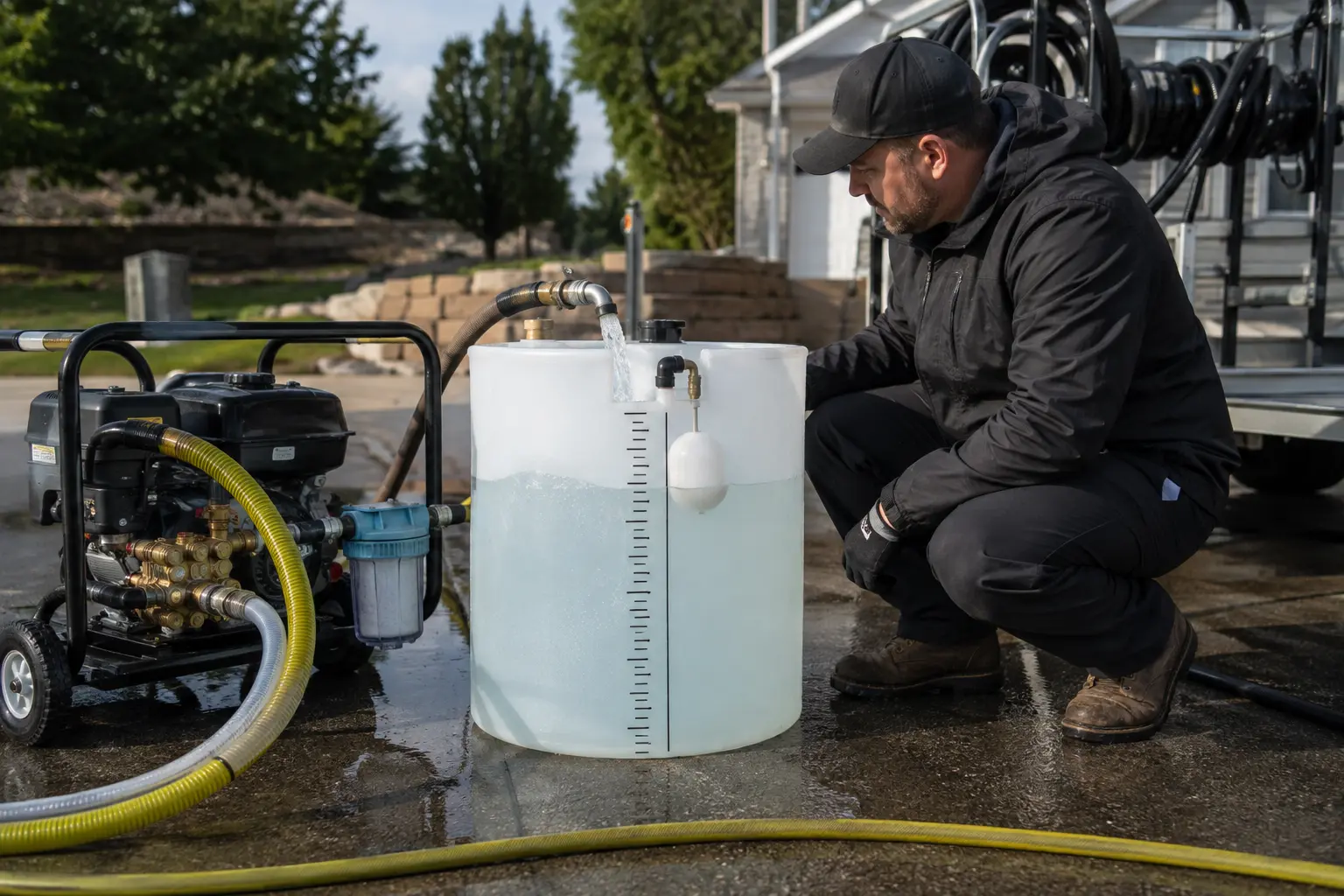
Test sustained supply. Starving a pump can cause cavitation and damage. High-flow work may require a correctly plumbed buffer tank, float system, larger feed hose, and safe transport load planning.
Size nozzle orifices and surface cleaners to actual GPM and intended pressure. Undersized tips raise pressure/load; oversized tips reduce pressure. Split flow correctly across rotating bars.
Operators doing occasional residential work, lacking vehicle payload, working where supply is weak, or without maintenance ability may gain more from a reliable modest system and better processes.
Surface condition, finish, soil type, water supply, access, drainage, equipment condition, nozzle and flow, chemical compatibility, operator technique, and local requirements can all change the correct decision.
Verify the exact material, existing damage, manufacturer instructions, product labels, PPE, water and electrical hazards, runoff controls, a safe test area, and the limits of your training.
Stop when the material or coating is unknown or unstable, access is unsafe, runoff cannot be controlled, electrical or water-intrusion risk remains, or the test area shows damage or an unexpected reaction.
General guidance cannot account for every surface, product, site, or local requirement. Follow equipment manuals and chemical labels, use appropriate PPE, test first, control runoff, and hire qualified help when conditions exceed your training or safe access.