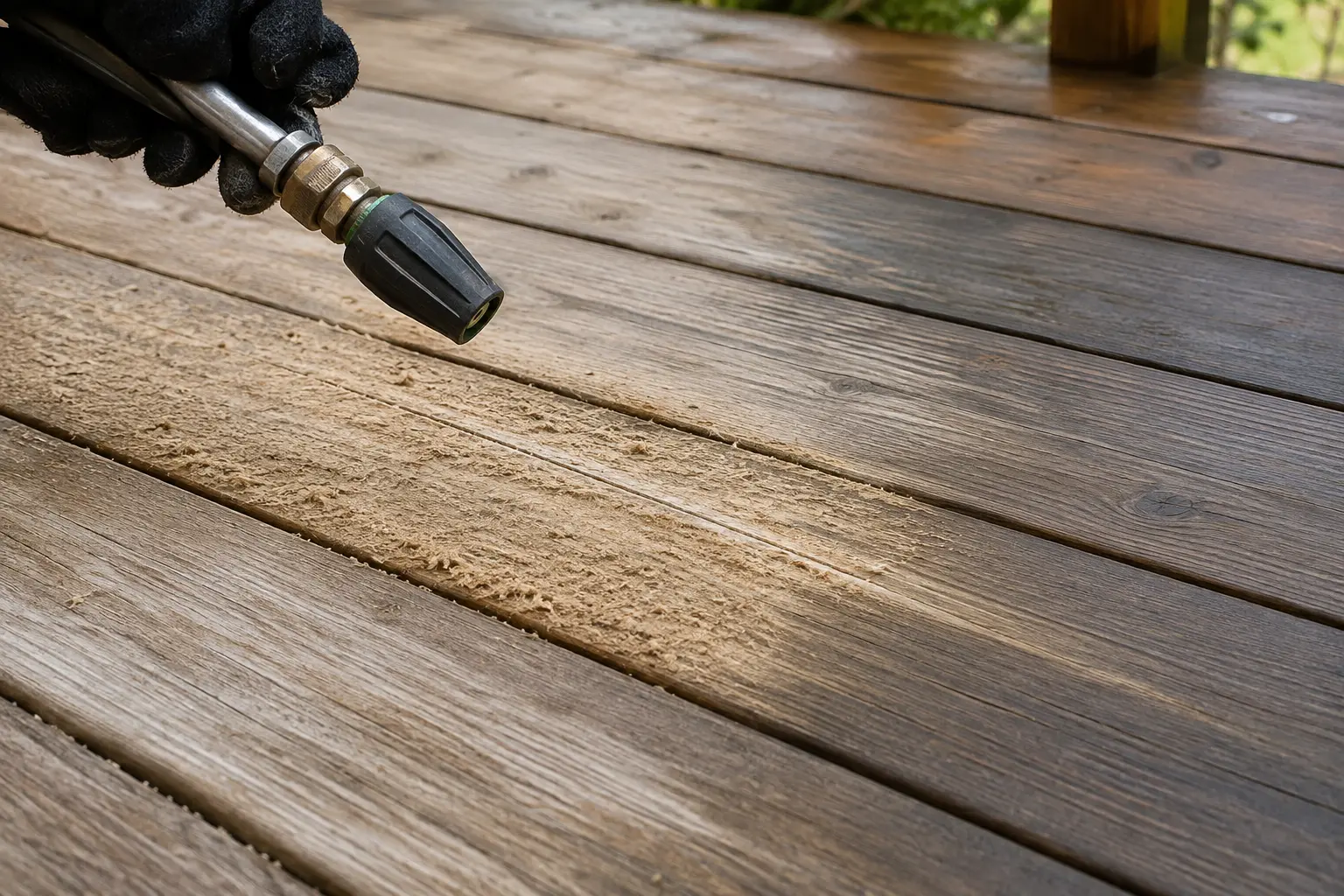
A concentrated jet can erode soft grain, raise fibers, carve lines, drive water into joints, strip finish unevenly, and leave a surface that requires sanding or refinishing.
QUICK VERDICT
Use the least aggressive process, correct wood-safe chemistry where suitable, a wide fan at conservative distance, steady motion, and a hidden test. Stop at the first sign of fuzzing or cutting.
Wood can be scarred before the operator realizes the spray is too aggressive. Test first and preserve the grain.01
Wood is not uniform
Species, earlywood and latewood density, grain direction, weathering, moisture, rot, fasteners, stain, paint, and prior cleaning create different tolerances even across one board. Soft spring growth often erodes first, leaving hard growth bands raised.
02
Pressure magnifies mistakes
Narrow tips, short standoff distance, slow movement, high pressure, and cross-grain passes concentrate energy. The first visible warning can be a pale stripe, fuzzy fibers, torn grain around fasteners, or a lap mark that becomes more obvious after drying.
03
Damage versus temporary appearance
Wet wood can hide both cleaning inconsistency and fiber damage. Inspect after the surface dries. Uniform color change may reflect removed soil or finish; ridges, grooves, whiskered fibers, splinters, and sharp light-catching lines indicate mechanical alteration.
04
Safer sequence
Document the coating and board condition, protect surroundings, choose label-compliant wood cleaner when appropriate, test a low-visibility area, allow correct dwell, agitate selectively, rinse gently with the grain, and verify again after drying before expanding production.
05
Recovery after damage
Do not keep washing to blend a carved area. Stop, let the wood dry, document the affected boards, and evaluate whether controlled sanding, brightening, coating removal, board replacement, or a qualified refinisher is required. Further pressure can deepen the defect.
06
When not to proceed
Stop for loose boards, decay, lead-paint concern, unstable coatings, unknown historic material, severe splintering, unsafe access, or runoff you cannot control.
Frequently asked questions
Questions that change the decision
What conditions can change the answer on Why Pressure Washing Damages Wood?
Surface condition, finish, soil type, water supply, access, drainage, equipment condition, nozzle and flow, chemical compatibility, operator technique, and local requirements can all change the correct decision.
What should I verify before using this wood risk guidance?
Verify the exact material, existing damage, manufacturer instructions, product labels, PPE, water and electrical hazards, runoff controls, a safe test area, and the limits of your training.
When should I stop and hire a professional?
Stop when the material or coating is unknown or unstable, access is unsafe, runoff cannot be controlled, electrical or water-intrusion risk remains, or the test area shows damage or an unexpected reaction.
General guidance cannot account for every surface, product, site, or local requirement. Follow equipment manuals and chemical labels, use appropriate PPE, test first, control runoff, and hire qualified help when conditions exceed your training or safe access.