Core cleaning system
Machine, inlet hose, high-pressure hose, reel or organized storage, spray gun and lance, matched nozzle set, surface cleaner where justified, spare O-rings, filters, and basic repair tools.
A working setup needs more than a pressure washer: reliable water delivery, correctly sized nozzles, rated hose and fittings, surface-appropriate accessories, PPE, chemical controls, maintenance supplies, and documentation.
Buy for your first defined services. Reliability, compatible components, safe transport, and repair access beat an overloaded trailer filled with gear that has no verified job demand.
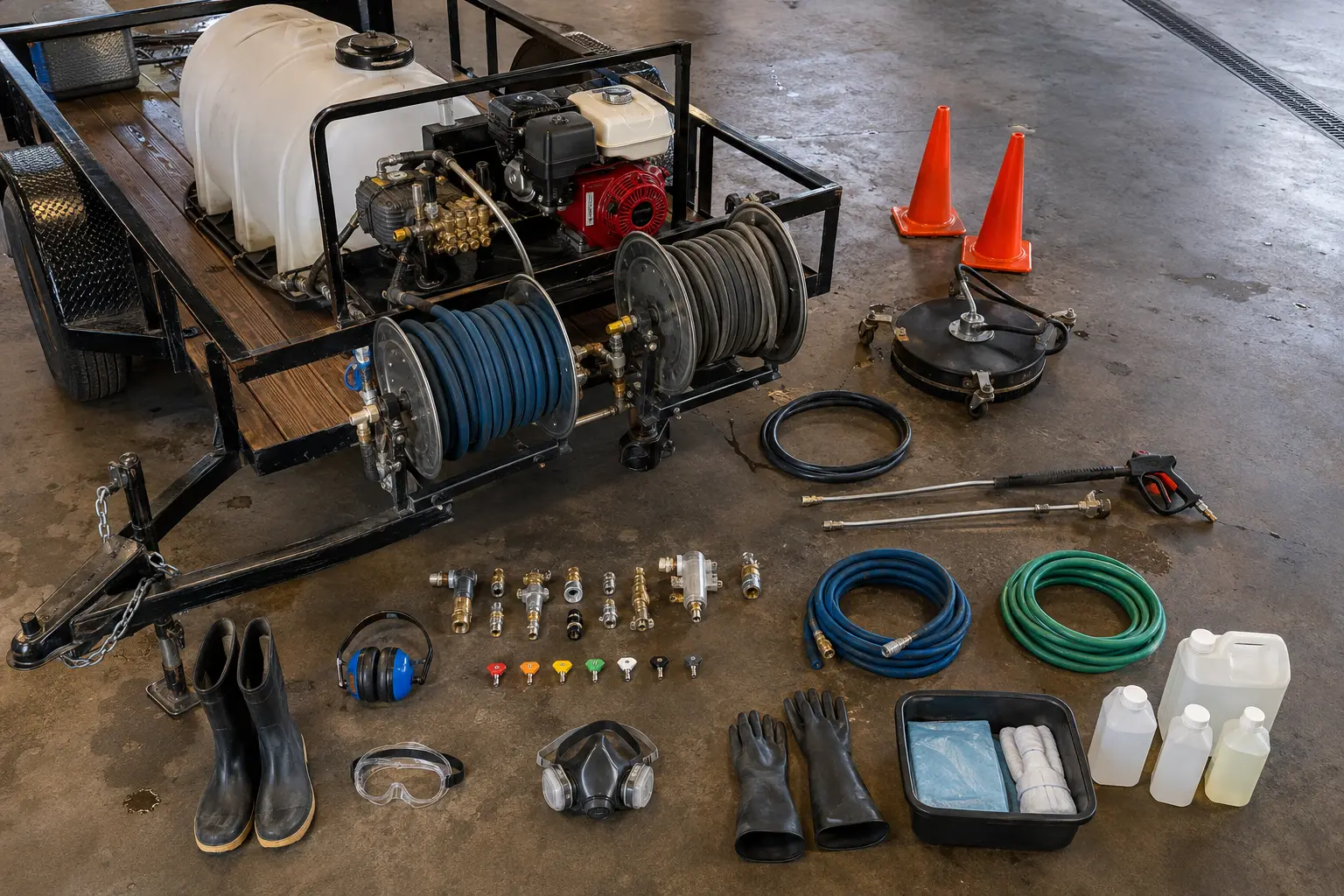
Machine, inlet hose, high-pressure hose, reel or organized storage, spray gun and lance, matched nozzle set, surface cleaner where justified, spare O-rings, filters, and basic repair tools.
Label-compliant containers, compatible hose and seals, measuring tools, secondary containment, gloves, eye protection, footwear, hearing protection, cones, signs, and site-specific protection.
Verify payload, tie-downs, tank baffling, axle limits, hose routing, ventilation, fuel separation, buffer plumbing, and the effect of water weight. One gallon weighs about 8.34 pounds.
Carry inspection forms, estimates, safety data sheets where required, maintenance log, customer scope, spare tips, fittings, filters, oil, and a plan for equipment failure.
Surface condition, finish, soil type, water supply, access, drainage, equipment condition, nozzle and flow, chemical compatibility, operator technique, and local requirements can all change the correct decision.
Verify the exact material, existing damage, manufacturer instructions, product labels, PPE, water and electrical hazards, runoff controls, a safe test area, and the limits of your training.
Stop when the material or coating is unknown or unstable, access is unsafe, runoff cannot be controlled, electrical or water-intrusion risk remains, or the test area shows damage or an unexpected reaction.
General guidance cannot account for every surface, product, site, or local requirement. Follow equipment manuals and chemical labels, use appropriate PPE, test first, control runoff, and hire qualified help when conditions exceed your training or safe access.