Production requirements
Define the services, weekly run time, typical hose length, target surface-cleaner size, hot-versus-cold-water need, crew count, expected downtime cost, and sustained inlet supply before shopping.
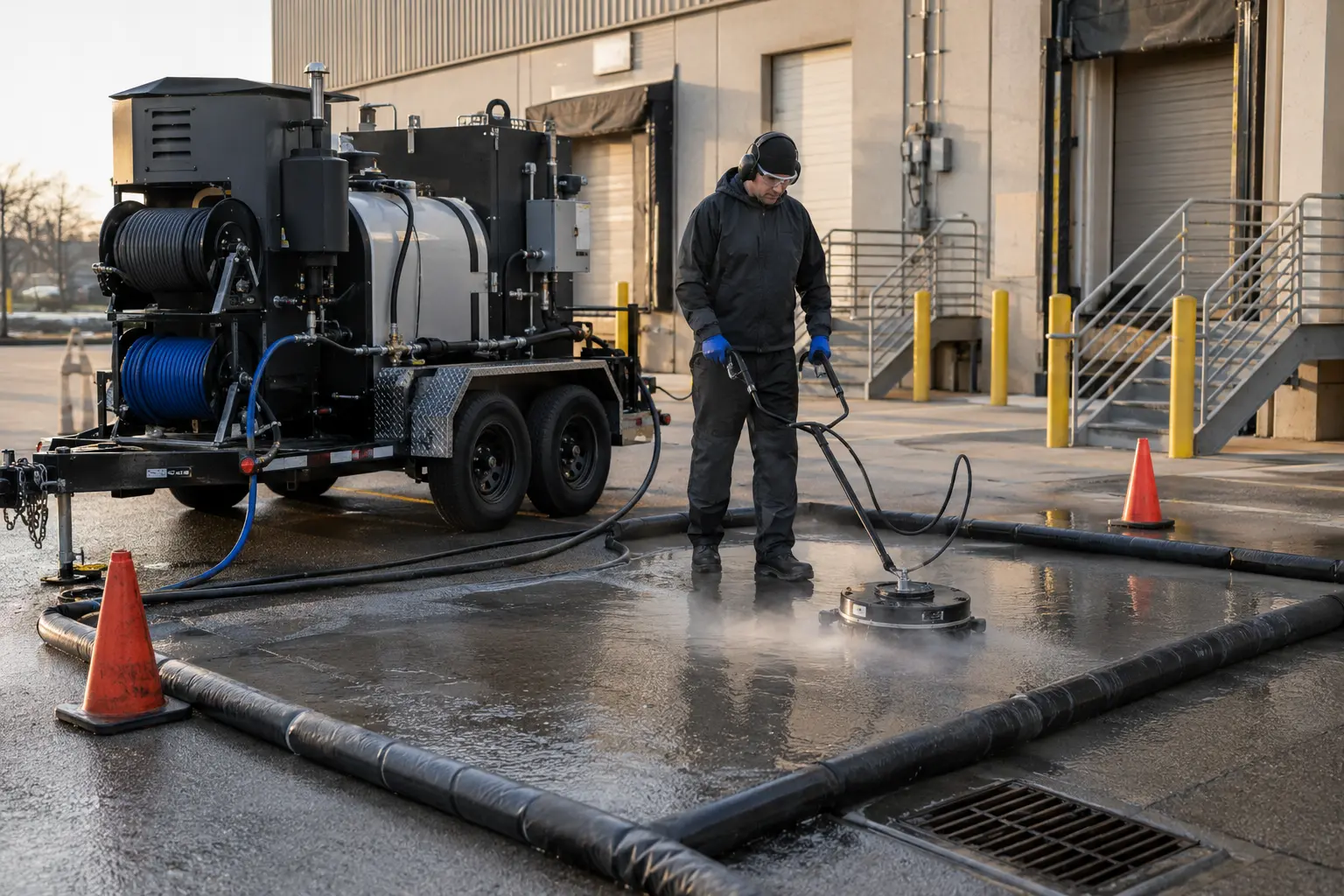
A commercial pressure washer should be selected as a serviceable production system: pump, engine or motor, water supply, bypass, hose, reels, nozzles, surface cleaner, chemical delivery, transport, and repair plan must work together.
A higher-flow machine earns its place only when real jobs, water supply, vehicle payload, accessories, maintenance capacity, and route economics can use the output.
Define the services, weekly run time, typical hose length, target surface-cleaner size, hot-versus-cold-water need, crew count, expected downtime cost, and sustained inlet supply before shopping.
Favor rebuildable pumps, accessible wear components, clear parts diagrams, common fittings, competent dealer support, and a maintenance schedule the operator can actually follow.
Tank capacity, baffling, plumbing, hose diameter, filtration, float control, bypass return, axle rating, center of gravity, tie-downs, and the 8.34-pound weight of each gallon affect safe transport and pump supply.
More output does not create demand. Avoid debt-funded rigs when safe service competence, lead flow, margins, route density, water logistics, and cash reserve are still unverified.
Surface condition, finish, soil type, water supply, access, drainage, equipment condition, nozzle and flow, chemical compatibility, operator technique, and local requirements can all change the correct decision.
Verify the exact material, existing damage, manufacturer instructions, product labels, PPE, water and electrical hazards, runoff controls, a safe test area, and the limits of your training.
Stop when the material or coating is unknown or unstable, access is unsafe, runoff cannot be controlled, electrical or water-intrusion risk remains, or the test area shows damage or an unexpected reaction.
General guidance cannot account for every surface, product, site, or local requirement. Follow equipment manuals and chemical labels, use appropriate PPE, test first, control runoff, and hire qualified help when conditions exceed your training or safe access.