Recommended method sequence
Pretreat the identified soil when appropriate, use an evenly paced and correctly sized surface cleaner or controlled fan pattern on sound cured flatwork, rinse thoroughly, then inspect after the surface begins drying.
Clean concrete with the least aggressive process that removes the identified contamination while staying inside the material, site, and operator limits.
The safest method depends on exact material, age, condition, finish, contamination, access, drainage, nearby property, and test-area behavior—not a universal PSI promise.
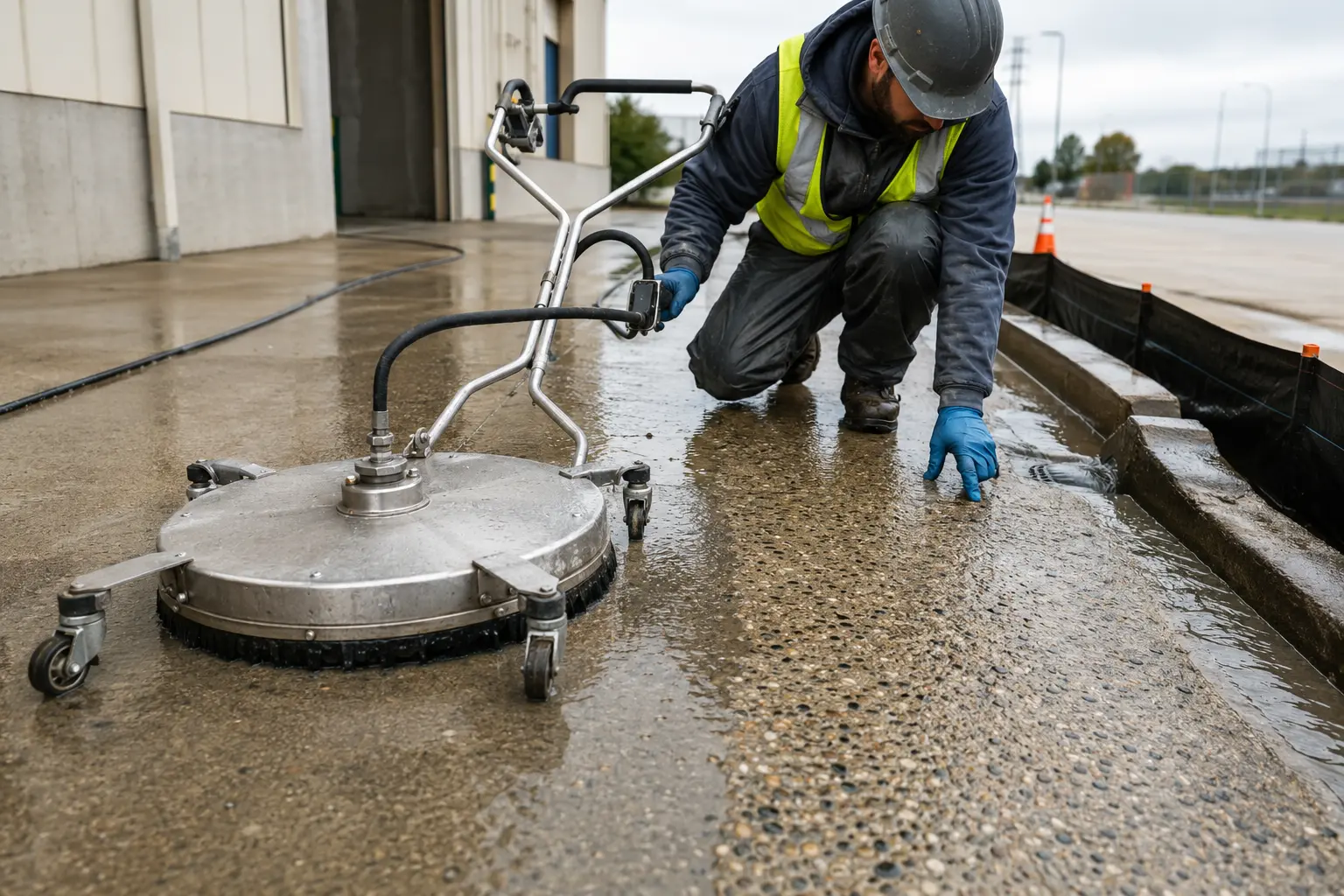
Pretreat the identified soil when appropriate, use an evenly paced and correctly sized surface cleaner or controlled fan pattern on sound cured flatwork, rinse thoroughly, then inspect after the surface begins drying.
Age, curing, finish, exposed aggregate, sealer, spalling, cracks, joints, nozzle orifice, standoff, flow, and pace matter more than one universal PSI number.
Choose a label-compliant product for organic growth, oil, rust, or another identified stain. One chemical does not treat every contaminant; protect metals, plants, and drainage.
Stop if cement paste, aggregate exposure, color, coating, joint filler, or texture changes—or when concrete is fresh, weak, unknown, or already deteriorating.
Surface condition, finish, soil type, water supply, access, drainage, equipment condition, nozzle and flow, chemical compatibility, operator technique, and local requirements can all change the correct decision.
Verify the exact material, existing damage, manufacturer instructions, product labels, PPE, water and electrical hazards, runoff controls, a safe test area, and the limits of your training.
Stop when the material or coating is unknown or unstable, access is unsafe, runoff cannot be controlled, electrical or water-intrusion risk remains, or the test area shows damage or an unexpected reaction.
General guidance cannot account for every surface, product, site, or local requirement. Follow equipment manuals and chemical labels, use appropriate PPE, test first, control runoff, and hire qualified help when conditions exceed your training or safe access.