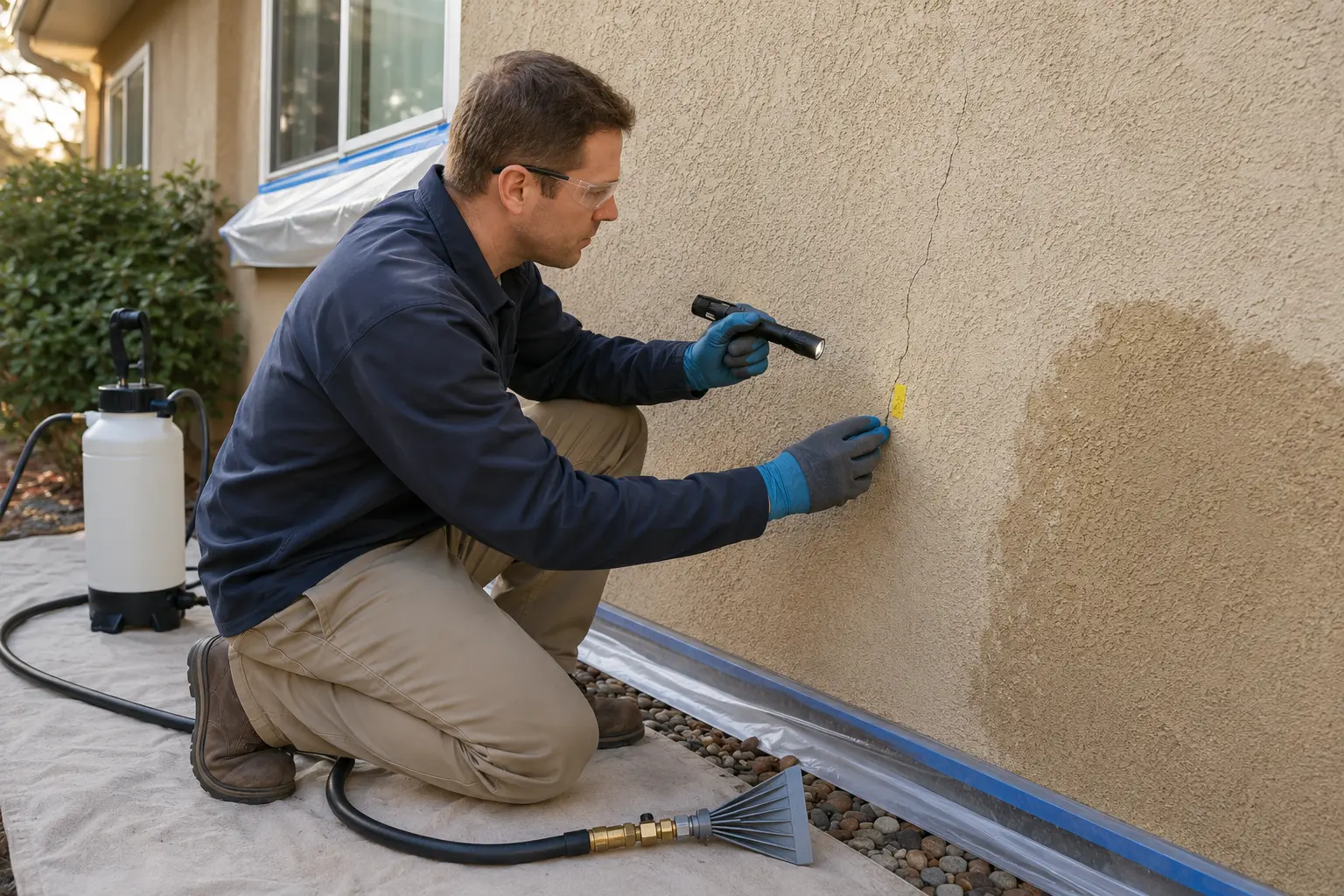
Clean stucco with the least aggressive process that removes the identified contamination while staying inside the material, site, and operator limits.
QUICK VERDICT
The safest method depends on exact material, age, condition, finish, contamination, access, drainage, nearby property, and test-area behavior—not a universal PSI promise.
Identify the wall system and defects before moisture or force reaches the building envelope.01
Recommended method sequence
Determine whether the finish is traditional stucco, EIFS, painted, sealed, cracked, or previously repaired. Use low-pressure application and rinse with compatible chemistry when the system and manufacturer guidance allow it.
02
Pressure, flow & equipment limits
Concentrated pressure can cut finish, open cracks, drive water into the wall assembly, or expose mesh. Texture creates uneven impact and hidden moisture pathways.
03
Chemical and runoff considerations
Test cleaners for finish and pigment compatibility. Control dwell, overspray, window exposure, metals, plants, and runoff; avoid aggressive acids or mixes without system-specific guidance.
04
Explicit stop conditions
Stop for hollow or loose areas, open cracks, unknown EIFS conditions, active leakage, failing paint, unsafe access, or any test that softens, streaks, or discolors the finish.
Frequently asked questions
Questions that change the decision
What conditions can change the answer on How to Clean Stucco Safely?
Surface condition, finish, soil type, water supply, access, drainage, equipment condition, nozzle and flow, chemical compatibility, operator technique, and local requirements can all change the correct decision.
What should I verify before using this surface method + risk guide guidance?
Verify the exact material, existing damage, manufacturer instructions, product labels, PPE, water and electrical hazards, runoff controls, a safe test area, and the limits of your training.
When should I stop and hire a professional?
Stop when the material or coating is unknown or unstable, access is unsafe, runoff cannot be controlled, electrical or water-intrusion risk remains, or the test area shows damage or an unexpected reaction.
General guidance cannot account for every surface, product, site, or local requirement. Follow equipment manuals and chemical labels, use appropriate PPE, test first, control runoff, and hire qualified help when conditions exceed your training or safe access.