Buyer who benefits
Homeowners with nearby GFCI-protected power, dependable water, modest cleaning scope, limited storage, and willingness to work at a slower pace gain the most from electric equipment.
Choose an electric pressure washer for lighter, intermittent cleaning when convenient startup, compact storage, and lower maintenance matter more than high sustained flow.
A compact electric unit fits cars with conservative technique, patio furniture, small patios, and routine rinsing. It is a weak fit for large driveways, long hose runs, heavy organic growth, or paid production work.
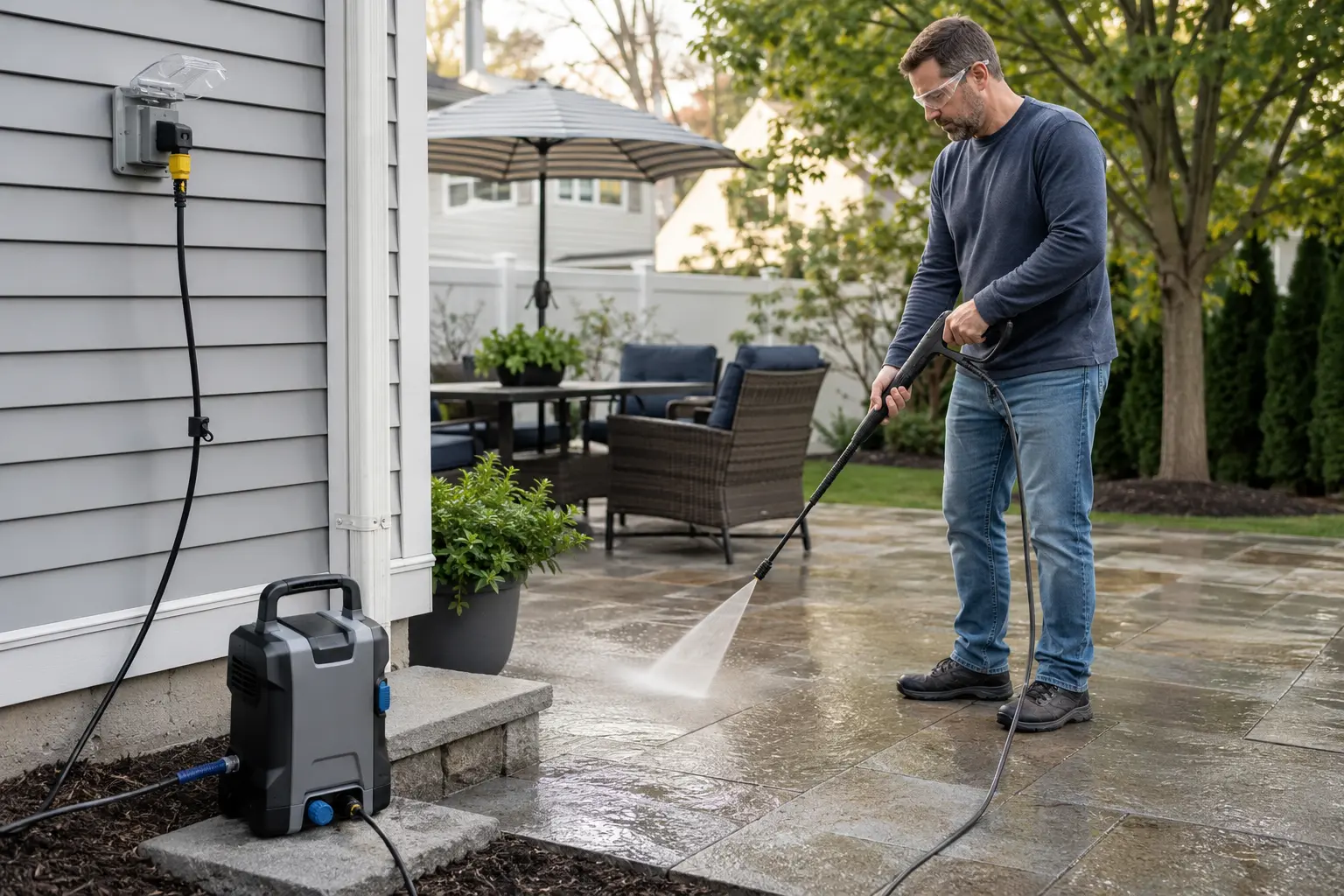
Homeowners with nearby GFCI-protected power, dependable water, modest cleaning scope, limited storage, and willingness to work at a slower pace gain the most from electric equipment.
Compare rated flow, working pressure, pump duty pattern, hose and cord length, fitting standard, total weight, onboard storage, nozzle set, warranty ownership, and replacement-part access.
Household circuits, extension-cord restrictions, thermal cycling, shorter hoses, proprietary fittings, and modest flow can limit coverage and accessory compatibility. Never use an electric unit where cords, connections, or outlets can sit in water.
Skip this category when the required work is frequent, commercial, far from power, dependent on a wide surface cleaner, or large enough that low flow turns the job into repeated stop-and-start sessions.
Surface condition, finish, soil type, water supply, access, drainage, equipment condition, nozzle and flow, chemical compatibility, operator technique, and local requirements can all change the correct decision.
Verify the exact material, existing damage, manufacturer instructions, product labels, PPE, water and electrical hazards, runoff controls, a safe test area, and the limits of your training.
Stop when the material or coating is unknown or unstable, access is unsafe, runoff cannot be controlled, electrical or water-intrusion risk remains, or the test area shows damage or an unexpected reaction.
General guidance cannot account for every surface, product, site, or local requirement. Follow equipment manuals and chemical labels, use appropriate PPE, test first, control runoff, and hire qualified help when conditions exceed your training or safe access.