Compatibility first
Confirm actual machine flow, working pressure, hose loss, cleaner pressure rating, inlet fitting, swivel capacity, bar height, and the combined orifice requirement of both nozzles.
Match surface-cleaner diameter, swivel design, working-pressure rating, and bar nozzles to the machine’s actual GPM and target pressure. Diameter alone does not predict cleaning speed.
An oversized surface cleaner may spin while cleaning slowly or leaving stripes. Verify manufacturer flow range and use two correctly matched bar nozzles before purchase.
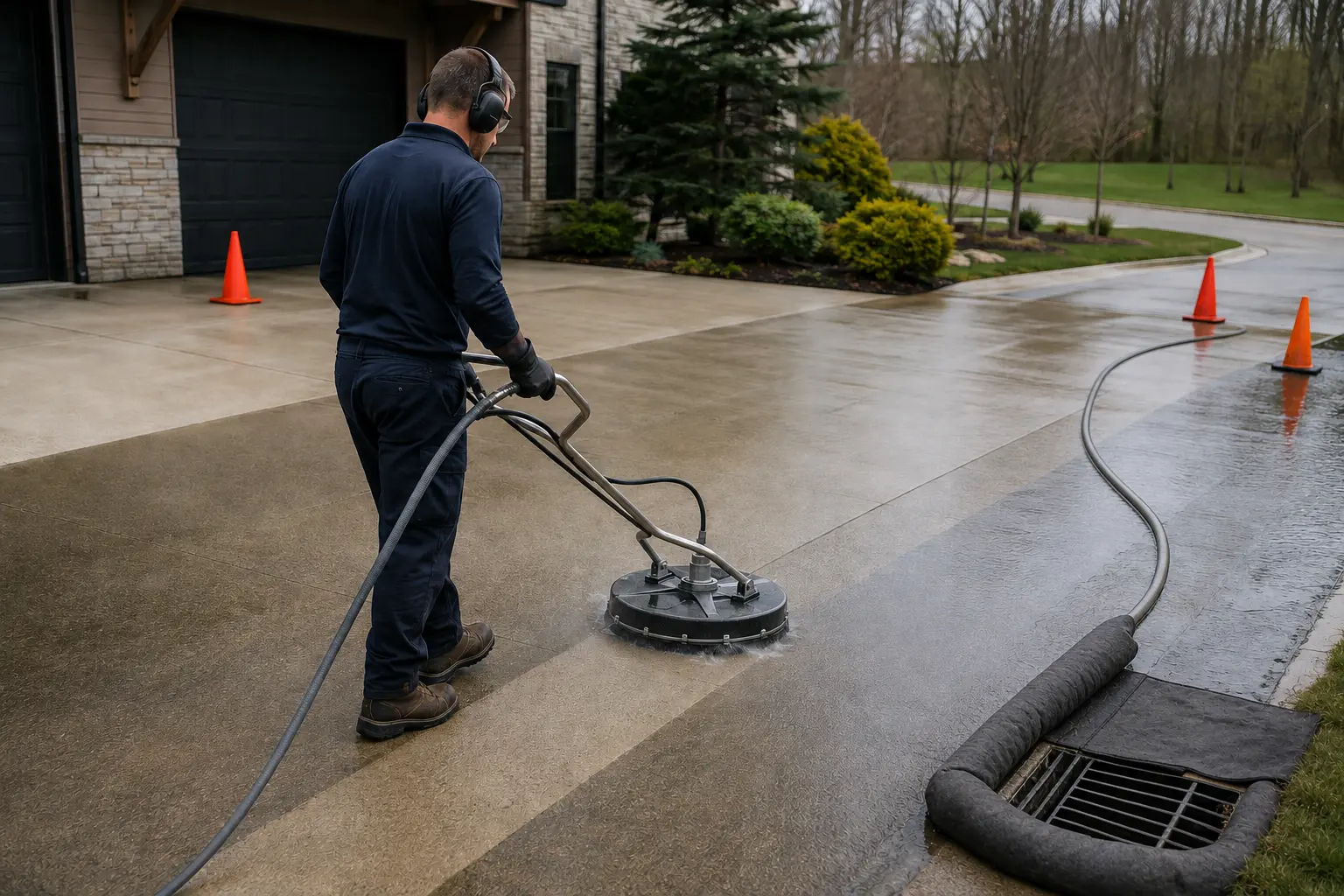
Confirm actual machine flow, working pressure, hose loss, cleaner pressure rating, inlet fitting, swivel capacity, bar height, and the combined orifice requirement of both nozzles.
Occasional homeowners may value light weight and easy storage. Paid operators should prioritize serviceable swivels, replaceable bars, caster or handle ergonomics, grease access where applicable, and dealer parts.
Uneven pace, poor overlap, worn or mismatched tips, clogged nozzles, low flow, excessive diameter, bent bars, swivel drag, tip height, soil variation, and inconsistent pretreatment can all create lines.
Skip the accessory if its minimum flow exceeds the machine, pressure rating is unclear, replacement nozzles are undocumented, or the working area is too uneven, fragile, narrow, or obstructed for safe control.
Surface condition, finish, soil type, water supply, access, drainage, equipment condition, nozzle and flow, chemical compatibility, operator technique, and local requirements can all change the correct decision.
Verify the exact material, existing damage, manufacturer instructions, product labels, PPE, water and electrical hazards, runoff controls, a safe test area, and the limits of your training.
Stop when the material or coating is unknown or unstable, access is unsafe, runoff cannot be controlled, electrical or water-intrusion risk remains, or the test area shows damage or an unexpected reaction.
General guidance cannot account for every surface, product, site, or local requirement. Follow equipment manuals and chemical labels, use appropriate PPE, test first, control runoff, and hire qualified help when conditions exceed your training or safe access.