Buyer who benefits
Property owners with repeated flatwork, long driveways, remote work areas, outdoor storage, mechanical confidence, and enough water supply can benefit from gas-powered output.
A gas pressure washer makes sense when mobility, stronger sustained output, and larger residential jobs justify fuel, engine maintenance, outdoor-only operation, noise, storage, and higher damage potential.
Buy for verified working GPM, pump serviceability, water-supply fit, and available repair support—not the largest PSI number on the box.
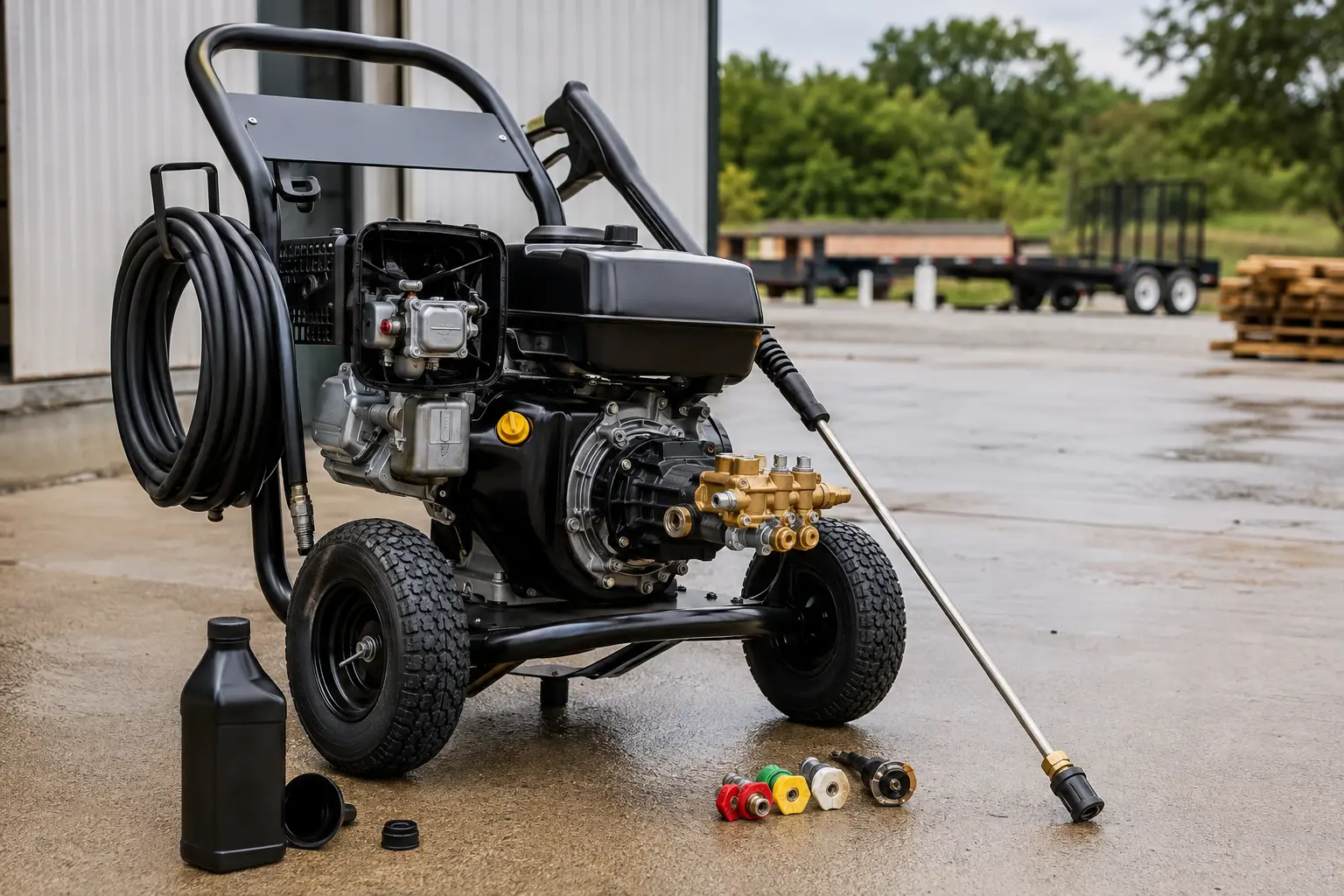
Property owners with repeated flatwork, long driveways, remote work areas, outdoor storage, mechanical confidence, and enough water supply can benefit from gas-powered output.
Compare sustained GPM, pump type, engine and pump pairing, unloader design, hose and gun ratings, nozzle orifice, frame access, vibration control, fuel shutoff, parts diagrams, and local service.
Gas engines create carbon monoxide and must remain outdoors away from openings. Fuel storage, oil changes, winterization, noise, vibration, hot surfaces, and pump bypass time are part of ownership.
Skip gas equipment if you lack ventilated storage, cannot maintain it, have weak water supply, need indoor operation, or only perform occasional light cleaning that a smaller system can handle safely.
Surface condition, finish, soil type, water supply, access, drainage, equipment condition, nozzle and flow, chemical compatibility, operator technique, and local requirements can all change the correct decision.
Verify the exact material, existing damage, manufacturer instructions, product labels, PPE, water and electrical hazards, runoff controls, a safe test area, and the limits of your training.
Stop when the material or coating is unknown or unstable, access is unsafe, runoff cannot be controlled, electrical or water-intrusion risk remains, or the test area shows damage or an unexpected reaction.
General guidance cannot account for every surface, product, site, or local requirement. Follow equipment manuals and chemical labels, use appropriate PPE, test first, control runoff, and hire qualified help when conditions exceed your training or safe access.